
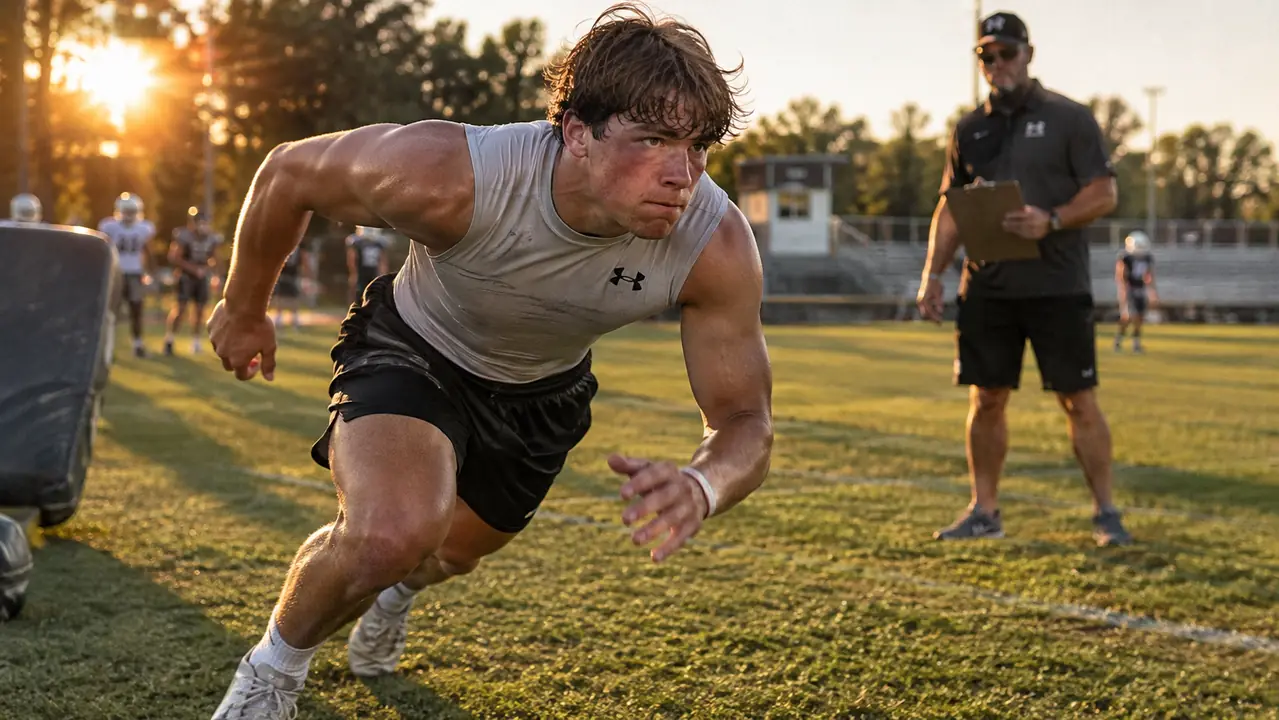
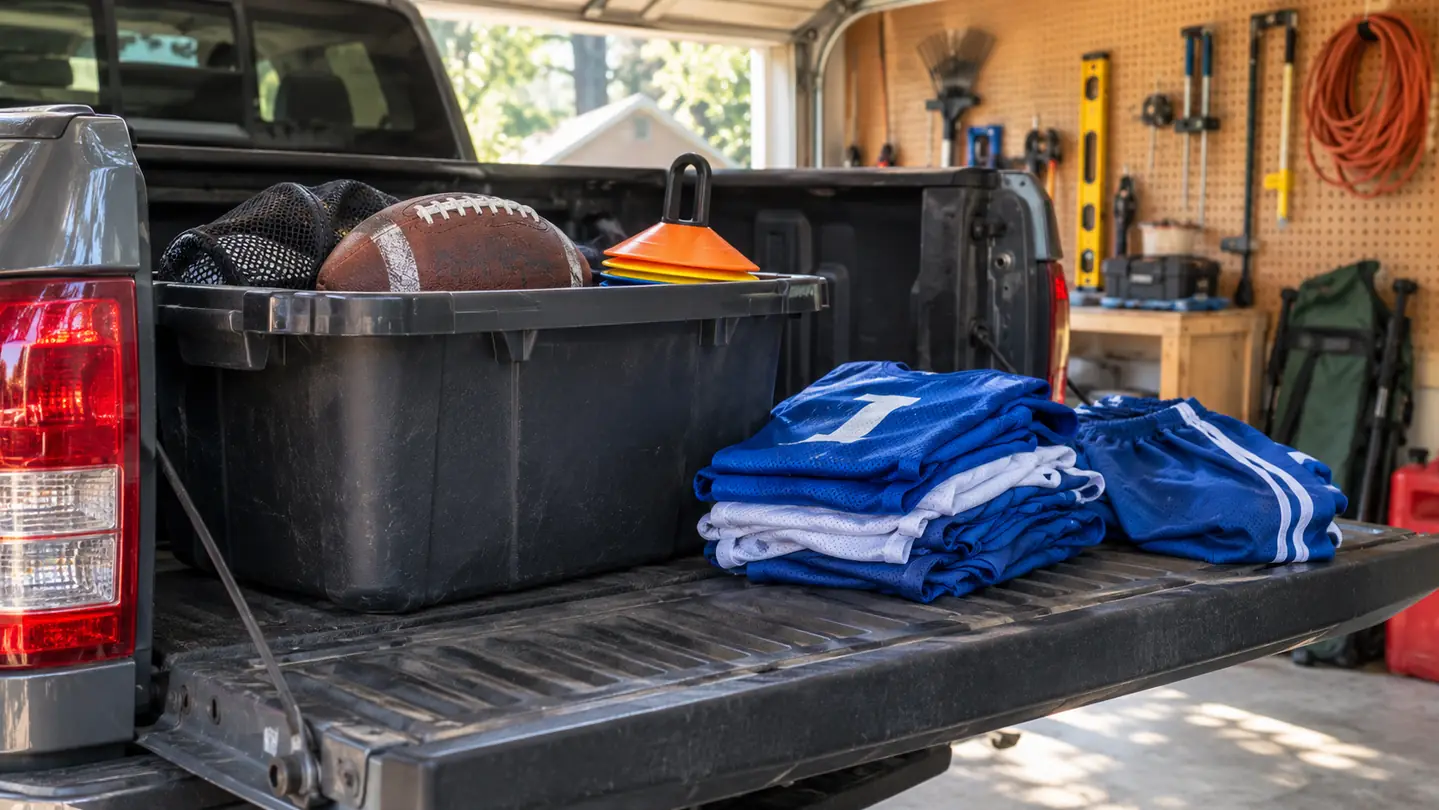
Every August the same question comes out of the equipment bin. A parent holds up a pair of football pants with the thigh pads half slid out of their pockets and asks whether their kid would be better off in a girdle instead. I have hauled that bin to practice in the back of my gray pickup for six seasons, first as a dad with a kid in the program and now as the volunteer line coach, and I have watched both setups go through Chattanooga August heat and a full JV schedule. The girdle most of my linemen end up wearing is the Sports Unlimited Omaha 7 Pad Integrated Adult Football Girdle. Here is the short answer first, then the long one.
The short answer: if the player is a lineman, a linebacker, or anyone who takes contact at the line of scrimmage every week, the integrated girdle is the better base layer. The pads are already where they belong when he pulls it on, which means nothing shifts at the snap and nothing gets left on a locker room floor. Separate padded pants with slide-in pads are the better answer if the player needs one garment that is the outer layer, if the program issues pants anyway, or if the family wants to be able to replace a single pad instead of a whole piece. That is the honest split. Everything past this point is the detail behind those two sentences, including the places where the girdle loses.
| Sports Unlimited Omaha 7 Pad Girdle | Slide-In Pad Pants | |
|---|---|---|
| Padding coverage | Pads at the hips, thighs, knees and tailbone are built into the garment | Typically thighs, knees and hips. Tailbone coverage depends on the pant |
| Pad stability | Pads are sewn in place and cannot work loose during a play | Pads sit in internal pockets and can rotate or slide down |
| Getting it on and off | Pull-on compression fit with adjustable straps | Belt or snap closure, opens flat before you put it on |
| Laundry | The padded piece goes into the machine as one unit | Pads come out and the shell washes on its own, and dries faster |
| As the outer layer | Designed to be worn beneath padded football pants | Is the outer layer, takes the grass stains, shows up on film |
| Replacing a single pad | A worn section means replacing the garment | Buy one new pad and keep the pant |
| Cup pocket | Built in, with the cup sold separately | Depends on the specific pant you buy |
| Sizing range | Waist based, small at 28 to 30 inches up through 3XL at 44 to 46 and a 4XL above that | Waist and inseam based, published range varies by maker |
| Best for | Contact positions that need pads that stay put | Programs that issue pants and players who want one outer layer |
Where the Sports Unlimited Omaha 7 Pad Girdle Wins
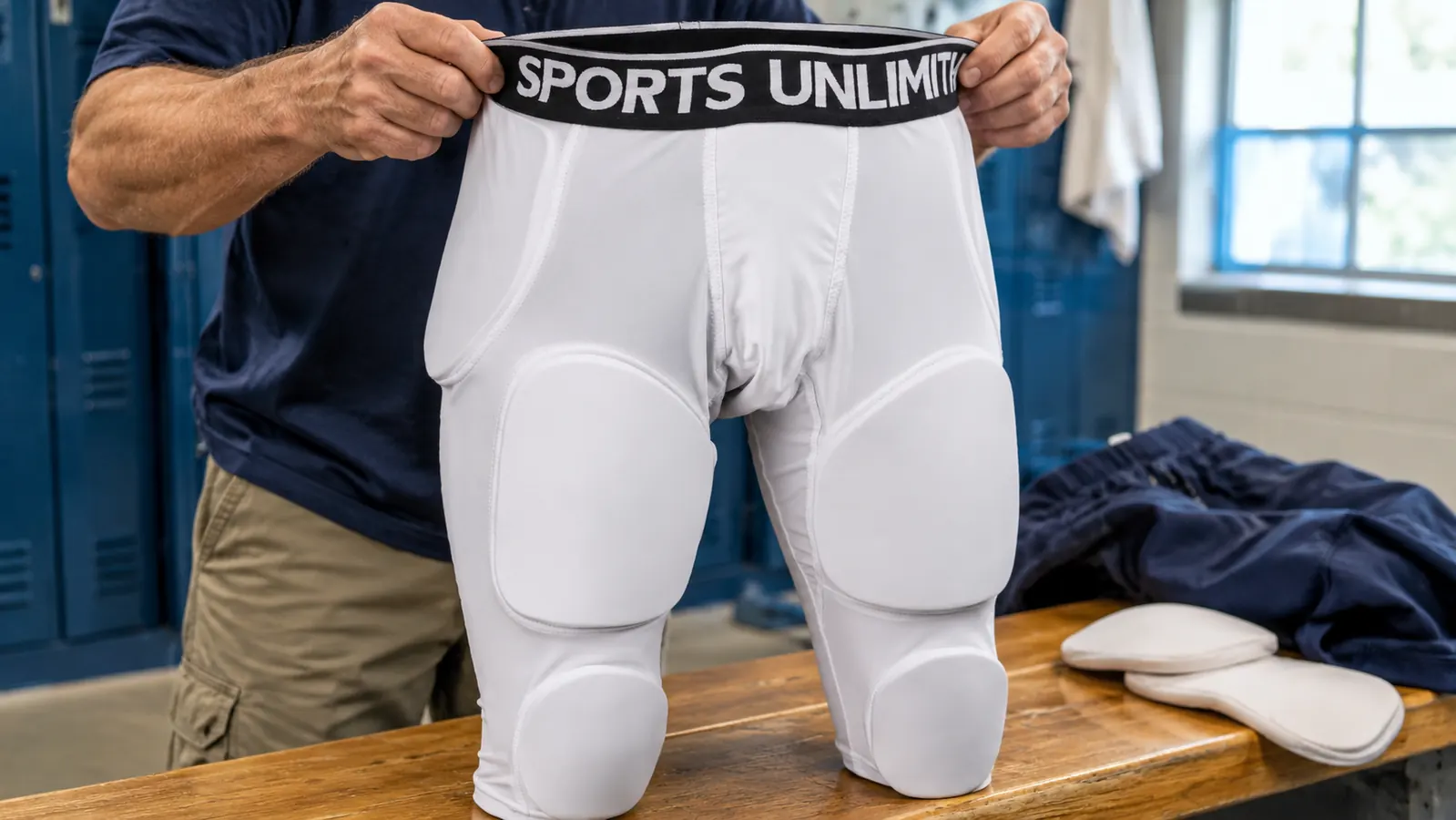
The girdle's argument is that the padding is already in place when the player pulls it on. The Omaha covers the hips, thighs, knees and tailbone, and those pads are part of the garment rather than inserts sitting in four separate pockets. The listing name says seven pads and the listing bullet copy says ten, which sounds like a contradiction until you stop counting and start looking at where the foam actually sits. What matters on a Friday night is that a thigh pad cannot work its way around to the side of a leg during a pass rush, and it cannot be left behind on a bench. I have fished a knee pad out of a mud puddle in November. I have never fished one out of a girdle.
The compression fit is the second part of the case and it does more work than people expect. The listing describes a compression fit built for a fuller range of motion, and that matches what I see in drills. A player in a snug girdle can pull, sink and drive without a pad catching on another pad or on the inside of a pant leg. The waist adjusts by strap, the whole thing is pull-on, and there is a built in cup pocket with the cup sold separately. For a linebacker asked to take on a fullback in the A gap one play and drop into a hook zone the next, pads that move with the body instead of against it are worth more than an extra half inch of foam.
Where Slide-In Pad Pants Win
Pants win the argument that matters most to a program: they are the outer layer. They go over the base layer, they take the abuse, and they are what the team looks like on film. If your school issues padded pants, the girdle does not replace them. The Omaha listing is explicit that it is designed to be worn beneath padded football pants, and treating it as a substitute for team issued gear is how a parent ends up buying twice. Pants also let you replace a single pad. Blow out one knee pad and you buy a knee pad. Blow out a section of an integrated girdle and you are replacing the garment. I have watched that play out. One October a knee pad split down the middle during a wet practice and the fix was a replacement pad pulled out of a drawer. Had that been a sewn in section of a girdle, the fix would have been a new girdle over two inches of torn foam.
Then there is the locker room, where pants win on plain convenience. A pull-on girdle is a compression garment, and compression garments are not friendly to a player who is still damp after a shower. Pants with a belt or a snap closure go on and come off faster, and the pads come out for laundry so the shell washes alone instead of the whole padded piece going into the drum. That is not a small thing across a season of three practices a week. The adjustable straps on the girdle help, but they do not change the fact that you are pulling it over your hips.
If your player has ever lost a pad between the locker room and the huddle, start here.
The Sports Unlimited Omaha 7 Pad girdle puts the padding at the hips, thighs, knees and tailbone and keeps it there. Waist sizing from small through 4XL. 1,227 ratings at 4.4 stars. Pull it on and the pads are already where they need to be.
Amazon Check Today's Price on Amazon →How I Compared Them Over a Full Season
I did not run a lab test. I ran an equipment bin. My son Jalen is fifteen, a sophomore linebacker, and between his gear and the spare bin I keep in the garage, I have had both setups in rotation since the spring. What I watched for was simple. Did the pads stay where they started. Did anything get lost. What did Sunday laundry look like. Those three questions sort these two options faster than any spec sheet, and they are the three questions a parent actually cares about in week nine.
On pad position, it was not close. The pants needed attention at least once a week, usually a thigh pad that had rotated or a knee pad that crept down after a set of up-downs. The worst of it came on a Tuesday in the second week of the season, when a player came off the field carrying his thigh pad in his hand. It had worked out of the pocket during a goal line period, and we burned four minutes of a special teams block getting it back in. Four minutes does not sound like much until you multiply it by three coaches and twenty two players standing around waiting. The girdle never cost us a snap like that. On lost equipment, same story. The spare bin has collected a small pile of orphan pads over six seasons and every one of them came out of a pair of pants. On laundry, the pants won. Pulling the pads out and washing the shell is quicker, and the shell dries faster than a padded garment does on a humid Tennessee evening.
One thing I did not expect. The players who complained about the girdle were the ones who had sized it like a t-shirt. A compression garment that is too loose bunches at the waist and rides up, and the player blames the gear. Sized correctly, the complaints stopped. That is not a knock on the product so much as a warning about how to buy it, which is why the sizing section below is the one I would read twice before ordering.
The pads are in the same place in the fourth quarter as they were at the first whistle, and nobody had to stop practice to fix them.
The Layering Question
Some players wear both, and it is worth being clear about why. The girdle is built to sit under padded football pants, so a program that issues pants can still use it as an added layer for hip and tailbone coverage that the issued pads may not give you. That is a legitimate use, especially for a player coming off a bruised tailbone. It is not a reason to buy a girdle and skip the pants your program requires, and any coach who tells you otherwise is handing you a problem in October.
The other version of the question is practice. In a shorts and shell practice the girdle is what most of my players wear, and it handles that fine. In a full pad practice, follow your coach. I would rather a player be slightly over-padded in August than explain to a parent why his linebacker was in shorts on a contact day. What I tell parents is to ask the coach one question before spending anything: what does my kid wear on a Tuesday in full pads? The answer sorts out whether the girdle is an addition or a replacement. In our program it is an addition in full pads and the only padded piece in a shell practice, so one purchase covers the whole week. A family that assumes it replaces the issued pants ends up buying the pants in September anyway.
Sizing and Fit Notes
The girdle is sized by waist measurement. Small covers 28 to 30 inches, medium covers 30 to 32, large covers 34 to 36, extra large covers 38 to 40, double extra large covers 42 to 44, and 3XL covers 44 to 46, with a 4XL above that. Read the list twice, because there is a gap between medium and large. A player measuring 33 inches does not have a clean answer in that chart, and in my experience he is better off in the large with the adjustable straps taken in than fighting a medium over his hips every week.
Measure the waist, not the hips, and measure it over a t-shirt rather than against skin. Pull-on closure means the number that matters is the one the garment has to clear. If your player is between sizes and has never worn a compression garment, go up. If he has worn one for a couple of seasons and knows he likes it tight, stay with the chart. Then treat it like any compression piece: cold wash, air dry, because heat is what kills stretch. The way we do it in the garage is a cloth tape measure and a note card. We write the waist number, the date and the size we ordered, and the card goes in the bin with the spare gear. Two seasons of those cards have kept me from reordering a size that fit a kid who has since grown three inches, and they settle the argument with a parent who swears his son was a medium last fall. Measure in the morning if you can. A waist taken right after a two hour practice is not the number you want to buy from.
Who Should Buy Which
Buy the Sports Unlimited Omaha 7 Pad girdle if your player is a lineman, linebacker, fullback or tight end who takes contact every week, if he has ever shifted or lost a pad during a game, or if he is the kind of kid who leaves gear on the locker room floor. It also makes sense for a player who wants hip and tailbone coverage that standard pant pads do not always give. Get the waist size right and it will go a full season without fuss, which is more than I can say for the loose pads in my spare bin.
Stay with slide-in pad pants if your program issues them and your player is happy, if he needs one garment that is the outer layer, if you want to replace a single pad instead of a whole piece, or if laundry speed matters in your house. There is nothing wrong with pants. They have been the standard for a reason, and a well fitted pair with the pads properly seated protects a player just fine. The girdle wins on pads staying put. The pants win on everything that happens around the pads.
Pads that are already in place when the ball is snapped.
Waist sizing from small through 4XL, adjustable straps, a cup pocket built in with the cup sold separately, and padding at the hips, thighs, knees and tailbone. Check the size chart against a tape measure before you order.
Amazon Check Today's Price on Amazon →