
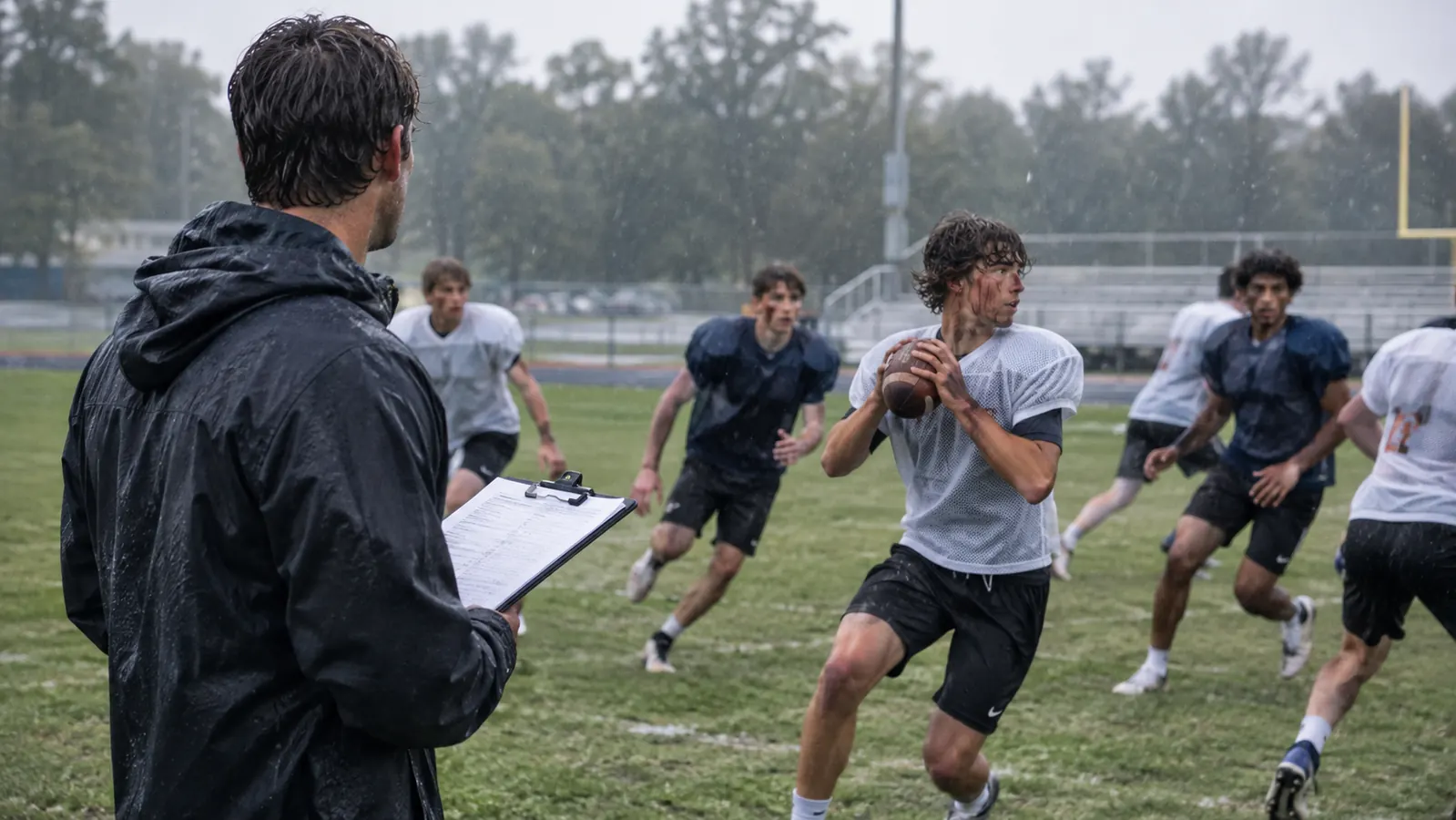
The pass was there. It was a wet Thursday practice in Chattanooga, the kind where the ball picks up water on every throw, and one of our JV receivers let it slip through his hands three times in the same drill. He was not wearing gloves. I am the line coach, not the passing coordinator, but I keep the equipment bin in the back of my gray pickup, and by Friday I had a box of Seibertron Pro 3.0 Elite Ultra-Stick receiver gloves in it. I did not make a speech. I just put them in the bin and waited for the next wet practice.
I did not buy them because of one bad practice. I bought them because I have watched too many young receivers fight the ball in bad weather with bare hands. The Seibertron pair I ordered was adult medium, and the sizing runs on palm measurements in centimeters. The listing says centimeter data has less deviation than inch data, which matters when you are fitting a 15-year-old whose hands are still growing. I measured two of our skill players before I ordered, and neither one was the size I would have guessed.

The first practice with the gloves was another wet one. Same receiver, same drill, same slick ball. He did not turn into a different player overnight. The gloves did not make him faster or fix his route. What changed was the end of the play. The ball stopped sliding through his hands. He caught the first two and came back to the huddle with a different posture. By the end of the drill he was asking for the ball instead of hoping it went somewhere else.
The gloves are synthetic, flexible, and close with hook and loop at the wrist. That last part is the piece parents should check first. If the wrist closure is loose, the glove shifts when the ball arrives, and a shifting glove is worse than no glove at all. We spent two minutes at the start of practice getting the closure snug and checking that there was no slack across the palm. A good fit is not a luxury. It is the difference between a glove that helps and a glove that gets in the way.
A dropped pass is never just a stat line. For a JV kid, it is a quick way to lose confidence in front of the whole sideline. I have seen receivers start body-catching after one bad drop, then stop running through the ball altogether. The gloves did not erase the drop from his memory, but they gave him a reason to put his hands out again. That is what equipment is supposed to do. It should remove a small excuse and let the player get back to the part that matters.
Three drops before the gloves. Then no drops in the same drill, in the same rain, with the same ball.
Same drill. Same rain. Different hands.
The Seibertron Pro 3.0 Elite Ultra-Stick is the receiver glove I keep in the team equipment bin now. Synthetic palm, flexible fit, hook-and-loop wrist closure, machine washable.
Amazon Check Today's Price on Amazon →I am hard on gear because I played offensive line in small college and I know what a bad fit feels like after two hours. A receiver glove has a different job, but the standard is the same. It has to stay put. The Seibertron gloves stayed put through a full practice, and they went into the wash after a muddy Saturday without coming apart. I would not call them fancy. I would call them useful, which is the word I care about more.
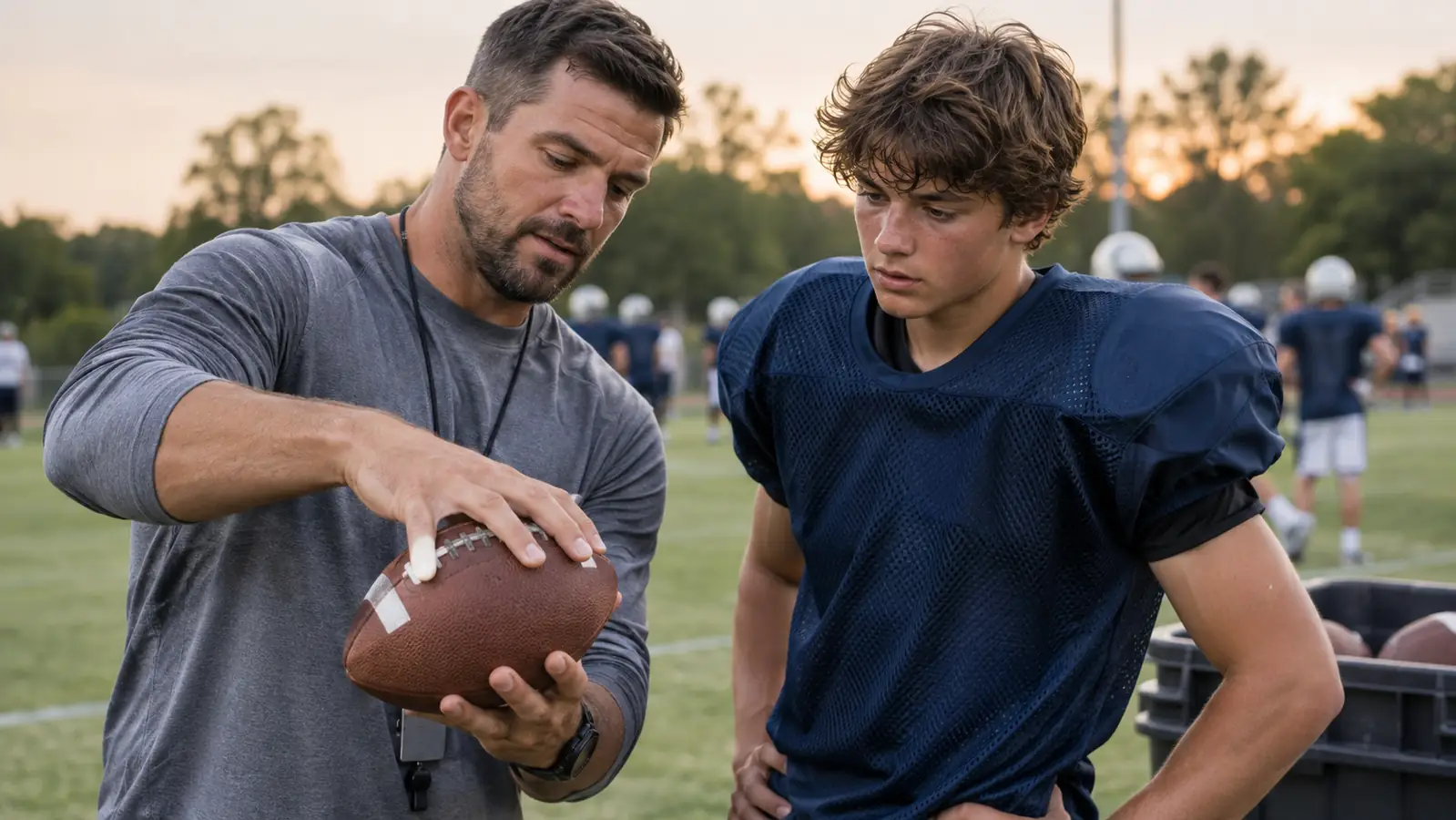
When we fit the rest of the skill players, I used palm length in centimeters, not a guess from a chart. The listing gives centimeter ranges for each size, from youth extra small up through adult, and the centimeter data is more consistent than inches. If a kid is between sizes, I would rather go with the snug fit and check the closure than hand him a glove that slides. We keep a few spare pairs in the bin now, and the players know where they are.
By the middle of the season, the gloves were just part of the equipment routine. They lived in the bin with the spare mouthguards and the practice footballs. I checked the seams every couple of weeks. Nothing tore. The palms were scuffed, which is what you want to see from a glove that has actually been used. They are machine washable, so they did not turn into a science project after a rainy week.
The alternative is what most of us did as kids. Bare hands in cold rain, or a cheap pair that bunches at the fingers. That is how you get stingers and fumbles. If your receiver is already fighting the ball, the last thing he needs is another reason to hesitate. A pair of gloves that fits is a small fix, but it is a fix. I have seen a lot of players lose confidence over things that could have been handled with better equipment and ten minutes of fitting.
What I'd Tell You If We Were Sitting at My Kitchen Table
If we were at my kitchen table and you asked me whether to buy receiver gloves for a JV kid, I would say yes, but start with fit. Measure the palm in centimeters. Check the wrist closure with the glove on. Make sure the fingers are not swimming. Then let the kid catch a wet ball in the backyard before you trust the gloves in a game. The Seibertron Pro 3.0 is the pair I would hand you first because it is simple and it holds its shape, but no glove will catch the ball for him. It only removes an excuse. If he still drops it, the glove is not the problem, and that is useful information too.
A small fix beats a long season of excuses.
If you coach JV or have a receiver at home, put one pair in the equipment bin and let the wet-ball drill tell you the truth.
Amazon Check Today's Price on Amazon →