

Every August, around the second week of practice, a parent stops me by the equipment bin and asks some version of the same question. Do I have to buy the big-name receiver gloves, or will a cheaper pair do the same job? For years I answered from memory and felt a little guilty about it. This summer I stopped guessing. I put a pair of Seibertron Pro 3.0 Elite Ultra-Stick gloves on one end of the garage bench and a pair of Nike Vapor Jet 8.0 on the other, and I ran both through six weeks of JV practice in Chattanooga heat.
Here is the short answer. For a young player whose hands are still growing, or for a family buying the first real pair of receiver gloves, the Seibertron Pro 3.0 is the pair I hand over. The sizing is published in centimeters down through the youth sizes, the shell is synthetic and flexible, the closure is hook and loop so a kid can tighten it himself, and the glove is machine washable. The Nike Vapor Jet 8.0 is the better glove for the player who already knows his size, wants the tackiest palm on the field, and cares how the glove looks under Friday night lights. Seibertron wins on information and on how long a pair lasts. Nike wins on the shelf and on the name.
| Seibertron Pro 3.0 | Nike Vapor Jet 8.0 | |
|---|---|---|
| Sizing data | Palm length and palm circumference published in centimeters for every size, youth XS through adult | Standard small, medium and large sizing with a simpler hand chart |
| Youth size range | Youth XS, S, M, L and XL, each with exact centimeter ranges listed | Youth sizes exist, but the small end is hit or miss on a store wall |
| Palm tack when new | Sticky out of the bag and still grabbing after a machine wash | The tack every other glove on the team gets compared to |
| Hand orientation | Ambidextrous, so a lost glove can be replaced with the spare | Cut left and right specific, which is more contoured |
| Wrist closure | Hook and loop | Adjustable strap |
| Palm material | Synthetic | Synthetic |
| Care | Machine wash, cold, air dry on the bench | Most families hand wash and air dry to protect the palm |
| Trying before you buy | Ordered online, so you measure the hand first | On the shelf at most sporting goods stores |
| Name on the back of the hand | Quiet | The one kids ask for by name |
How I Tested Both Pairs
A word about the test, because most glove comparisons are written by somebody who wore a pair for ten minutes in a store. I am 47, I played small-college offensive line, and my hands are a full size bigger than most of the kids I coach. My opinion of the fit is close to useless to a 13-year-old receiver. So the fit notes here come from my son Jalen, who is 15 and a sophomore linebacker, and from the JV skill guys who were willing to catch balls after practice in exchange for not running extra conditioning.
Both pairs went through the same routine. Route running on the practice field, catch drills against the machine, and about forty minutes a day of backyard work with Jalen on the other end. I kept both pairs in the garage rather than in the equipment bin so I could look at them side by side. After every session I checked three things: whether the palm still grabbed, whether the seams at the thumb and the base of the fingers had opened, and whether the wrist closure still held where it was set.
I also did the thing almost no glove comparison does, which is measure hands. I took a soft tape and measured palm length from the base of the palm to the tip of the middle finger, plus palm circumference around the widest part of the hand, for four players on the team. Then I matched those numbers to the sizing chart Seibertron publishes. This is the whole ballgame for a parent buying online, and it is where these two gloves separate fastest. One junior receiver measured 15.9 centimeters of palm length, which landed him between a youth M and a youth L on the chart. We ordered the M. He caught thirty balls in it that first afternoon and never once complained about a loose thumb. His family had bought a medium in a three-size glove the year before, and it turned on his hand at the catch from the first week.
Where Seibertron Pro 3.0 Wins
It wins on sizing information, and it is not close. The listing publishes palm length and palm circumference in centimeters for every size from youth XS through youth XL and on into the adult sizes. That means a parent can put a tape on a kid's hand in the kitchen, write down two numbers, and order the right glove the first time. Do that with a glove that only offers small, medium and large and you are guessing, and a guess on a receiver glove shows up all season as a kid fighting the glove instead of catching with it.
The measurement data is in centimeters on purpose, and the listing says why. Centimeters have less deviation than inches when you are measuring a hand, because a half inch is a much bigger jump than a half centimeter. For a 13-year-old whose hand changes every few months, that gap is the difference between a glove that fits in September and one that is already tight by the last game in October.
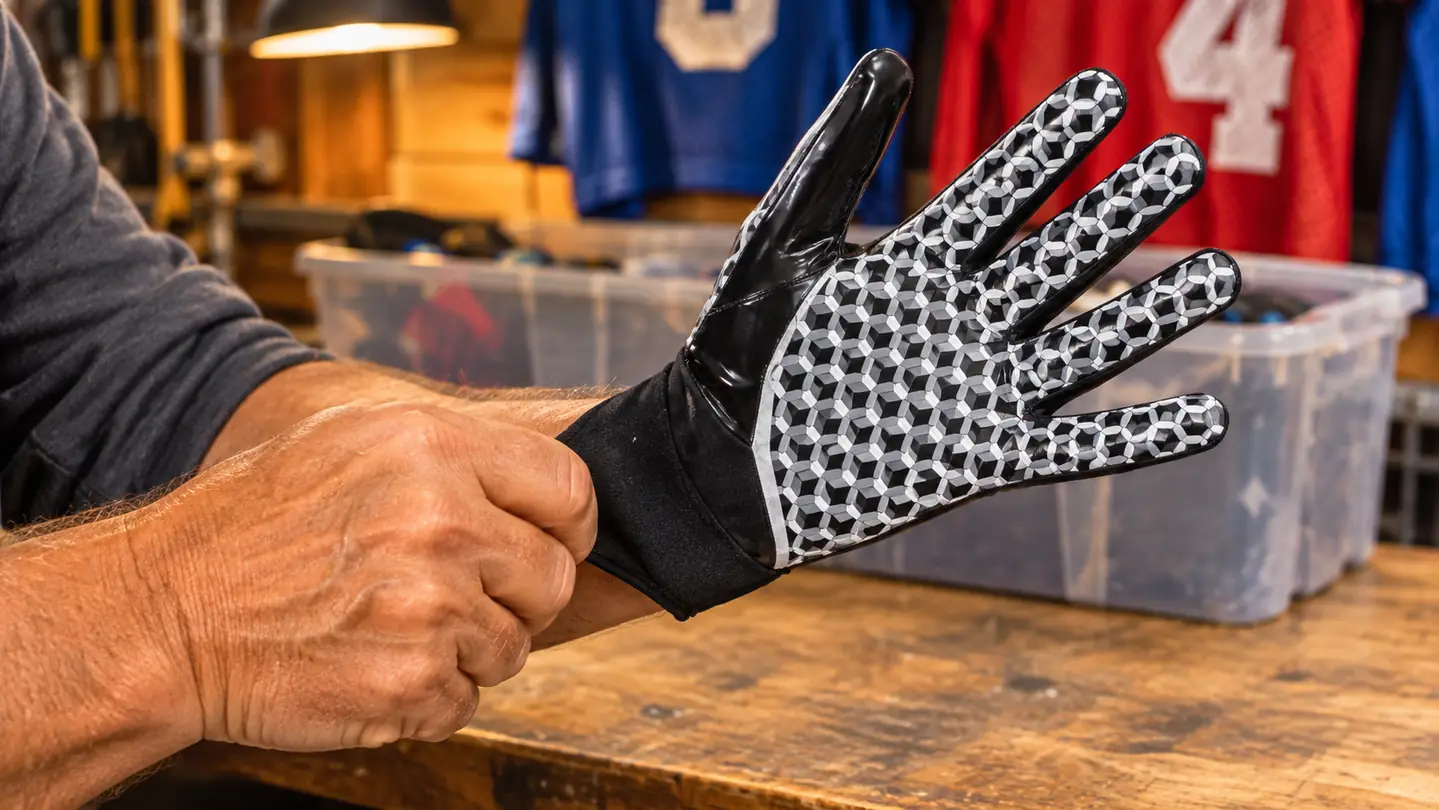
The build is plain and it holds. Synthetic palm, flexible shell, hook and loop wrist closure, machine washable. Nothing on the glove needs a manual. Jalen set the strap once in August and never touched it again. The Seibertron pair went through the wash twice, cold, air dried on the bench, and came back with the palm still grabbing. I have pairs from last season sitting in the spare bin that a JV kid could pull on tomorrow. The first real test came on a Thursday in the second week, a full-pad session on a field still wet from an afternoon storm. Both pairs got soaked through. The Seibertron dried overnight on the bench and was grabbing again the next morning. The Nike stayed slick until it had dried out completely, which took until Saturday.
There is also a plain arithmetic argument that has nothing to do with brand. A sophomore can outgrow a glove between August and October. Buying two pairs of a glove that publishes exact centimeter ranges, one at his current size and one a size up for November, is a plan a family can actually run. That is a decision made on a measurement instead of a hunch, and it is the reason this is the pair I keep in the equipment bin.
Where Nike Vapor Jet 8.0 Wins
It wins the moment you walk into a store. Nike Vapor Jet gloves sit on the shelf at most sporting goods places around Chattanooga, which means a kid can put a pair on, close his hand, and feel whether the thumb seam lands right. That is worth something a chart cannot match, especially for a player whose hand is between two sizes. You cannot do that with an online order. You measure, you hope, and you maybe drive to the return counter. I made that trip on a Saturday in July with Jalen. He pulled on a medium, closed his fist, and said the thumb seam sat too far back against the webbing. The large was right the second he closed his hand. Four minutes in the aisle settled what two weeks of reading charts had not.
It also wins on tack, at least when the glove is new. The Vapor Jet palm is the benchmark my skill guys compare every other glove to, and they are not wrong to. If a receiver wants the stickiest palm he can get for a Friday game, the Nike delivers that out of the bag. The Seibertron is tacky, genuinely, but I have never had a player describe it as the stickiest glove he has worn. Two of my skill guys noticed the difference before I said a word about it. By the third week the Nike palm had dulled to roughly where the Seibertron started, which is worth knowing before you decide the name is the whole reason for the difference.
And it wins on the name, which some coaches pretend does not matter. It does. A 15-year-old who asked for a specific glove and got it plays with a little more confidence, and confidence is worth a step on a route. The mark on the back of the hand is visible from the sideline. For a program with room in the budget and a player who already knows his size, that is a real argument, not a vanity one.
The Seibertron wins the argument a parent has in the kitchen. The Nike wins the argument a kid has in the car.
Measure the hand once, order the right size the first time
The Seibertron Pro 3.0 publishes palm length and palm circumference in centimeters for every size, including the youth sizes. That single detail is why it takes the sizing category and why it is the pair most families should start with.
Amazon Check Today's Price on Amazon →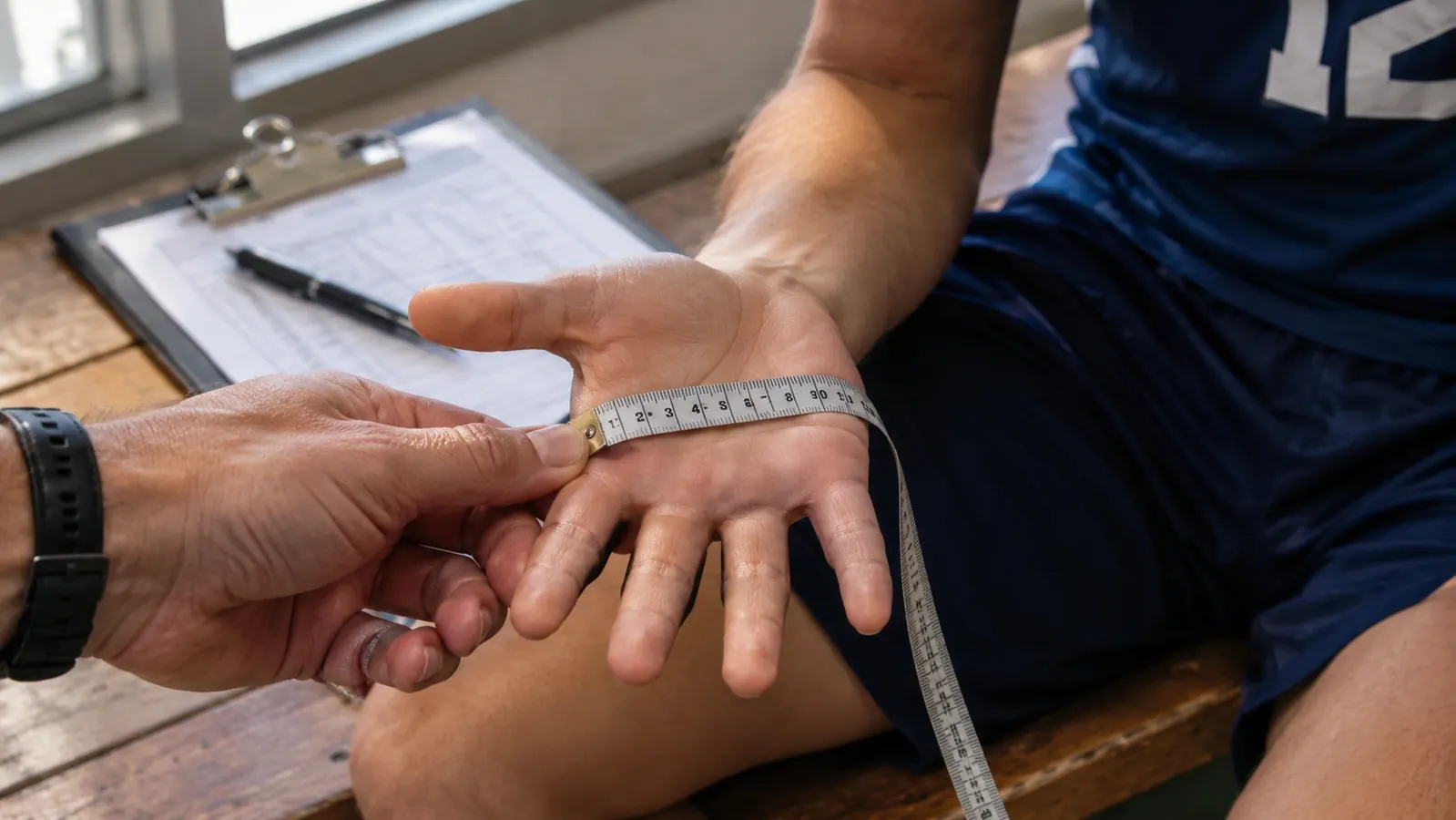
The Sizing Question Nobody Asks
Measure palm length from the base of the hand to the tip of the middle finger, and measure palm circumference around the knuckles rather than around the wrist. Write both in centimeters. Then use the chart instead of the age printed on the package. If a kid lands between two sizes, take the smaller one for a receiver glove, because a loose glove slides on contact at the catch and a snug glove only takes a week to break in. I had one player whose circumference put him in a large while his palm length put him in a medium. We went with the medium, because an extra half inch of glove past the fingertips bunches up right where the ball arrives.
The second question nobody asks is when to replace a pair. A receiver glove is finished when the palm stops grabbing, not when a hole appears. Test it by pressing the palm of one glove against the palm of the other and pulling them apart. If they slide with no resistance, the pair is done for games and belongs in the practice bin. I have pulled gloves out of the bin that looked fine and had no tack left at all, which is how a catchable ball becomes a drop.
This is where the published data earns its keep. Per the Seibertron chart, youth XL runs a palm length of 6.42 to 6.81 inches, or 16.3 to 17.3 centimeters, with a palm circumference of 6.5 to 7.01 inches, or 16.5 to 17.8 centimeters. When a kid measures in at the top of that range, you know before you order that he is about to move into the adult sizes. That is information a parent can plan a purchase around instead of discovering in the middle of a season.
One caution on fit and growth. Hands grow in spurts, so a glove that fits in August can be tight by the playoffs even when the numbers say otherwise. Measure again in midseason. It takes ninety seconds on the kitchen counter and it tells you whether to order the next size up before the last two games.
Who Should Buy Which
Buy the Seibertron Pro 3.0 if the player is in youth or junior high ball, if the hand is still growing, if this is a first real pair of receiver gloves, or if you are a coach stocking an equipment bin. The exact centimeter ranges, the ambidextrous cut, the hook and loop closure and the machine washable shell all point at the same buyer: somebody who needs the glove to fit correctly on the first order and survive until November.
Buy the Nike Vapor Jet 8.0 if the player already knows his size, if you can get him into a store to try a pair on, and if he wants the stickiest palm available and cares about the name on the back of the hand. It is the glove for a settled starter whose hand is not changing much, and it is the glove a kid will ask for by name whether or not you think the name matters.
If you are buying for more than one player, or for a bin that serves a whole JV roster, buy Seibertron and buy by measurement. You will spend less time on returns and less time listening to a kid complain that his glove is loose. If you are buying one pair for one settled starter who has been asking for the Nike since spring, buy the Nike and let him play. Both are honest ways to spend a Saturday morning.
Skip the September return line
Two numbers on a soft tape, one look at the centimeter chart, and the size question is settled before the season starts. The Seibertron Pro 3.0 is the pair that makes that possible for a growing hand.
Amazon Check Today's Price on Amazon →