

The Seibertron Pro 3.0 is a good receiver glove that I wanted to be a great one. I bought an Adult M pair for my son Jalen before spring drills. He is 15, a sophomore linebacker, and he spends part of every offseason working on catching and turning. I coach the JV line, so I see a lot of gloves come through the equipment bin. Most are forgotten by June. These stayed in the rotation. That is not the same as earning a full recommendation.
Here is the short version. The Seibertron Pro 3.0 does the basic job: it puts a synthetic palm on a flexible receiver glove, closes with hook and loop, and can go in the washing machine. For a first pair, a backup pair, or a middle school receiver who is still learning to catch with his hands, that is enough. For a player who practices four days a week and expects the same tacky feel in November that he had in August, these gloves ask more than they give. I will explain both sides, including the sizing issue that caused the most trouble in our house.
The Quick Verdict
Good first pair or backup glove with a real sizing catch. The initial grip is strong, but it fades by week three, and the centimeter chart is not optional.
Amazon Check Today's Price →Measure first, then order the right Seibertron size
The listing says centimeter data has less deviation than inch data. Use palm length and palm circumference, not age, then check availability.
Amazon Check sizing and availability on Amazon →How I've Used the Seibertron Pro 3.0
I am Desmond Pryor, 47, a volunteer assistant line coach for a high school JV team in Chattanooga. I played offensive line in small college, so my hands are not receiver hands. That matters because I am judging these gloves as a coach and a parent, not as a skill player. Jalen wore the Adult M pair for six weeks of spring work: three practices a week on the school field, two backyard sessions most weeks, and a handful of catch drills in the garage when it rained. I also kept them in the spare equipment bin for two practices so another player could try them. I wanted to see how they handled a different hand.
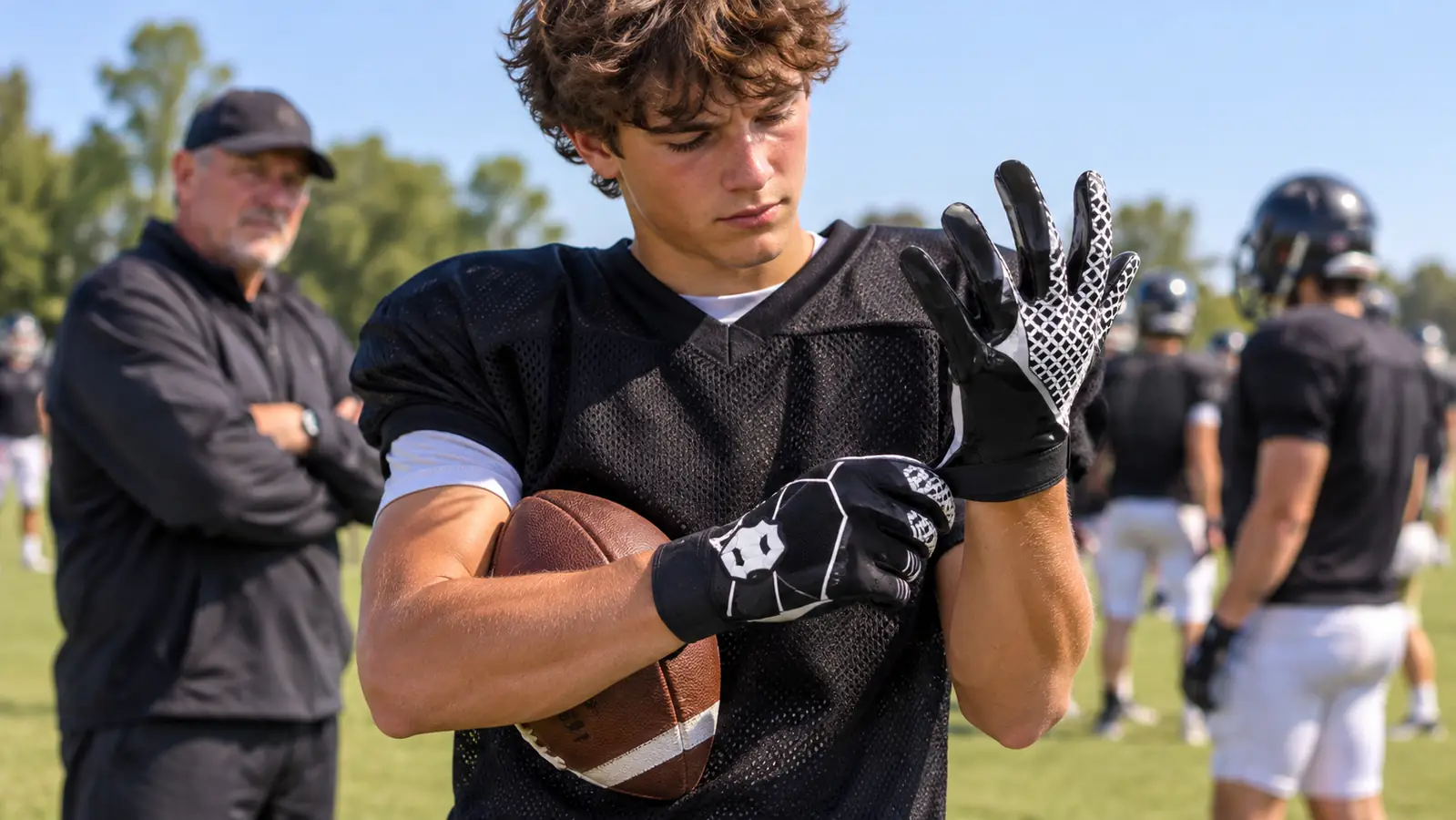
The first thing I noticed was the closure. The hook and loop strap is easy to pull with one hand, which sounds small until you are standing on a sideline with a football under your arm. The second thing was the flexibility. The listing says the additional feature is flexible, and that held up. Jalen could close his hand around the ball without fighting the glove. The third thing was the grip. Right out of the package, the synthetic palm was tacky enough that he caught a few balls one-handed in warmups. That was the high point.
We followed the care instructions and machine washed them once at the end of week three, then let them air dry. I am not going to pretend that is a lab test. It is what the tag says, and it is what most families will do. After that wash, the palm felt different. Not ruined, but less sticky. That is the kind of detail a product page cannot tell you, and it is the reason I started keeping notes on these gloves in the first place.
The Sizing Is the First Real Hurdle
The Seibertron Pro 3.0 comes in Youth XS through Adult sizes, and the listing is unusually serious about measurement. It says centimeter data has less deviation than inch data, then gives palm length and palm circumference in centimeters for each youth size. That is more useful than the usual 'order your normal size' note. It is also a warning. If you order by age or by the size your player wears in another brand, you are guessing. We ordered Adult M from the size chart, and the fit was close enough to use, but the hand opening took two practices to feel settled.
The gloves are ambidextrous, which helped us. There is no left or right glove to sort, so when Jalen grabbed a pair from the bin in a hurry, he did not have to check. For a team bin, that is a real convenience. For a player who wants a glove to feel custom from the first catch, it is a tradeoff. An ambidextrous glove has to work on either hand, and it will not mold to one hand the way a dedicated left or right glove might. I did not find that to be a problem on catches. I did notice it when Jalen first put them on and spent a minute pulling at the fingers.
The hook and loop closure gives you some room to tighten the wrist, but it does not fix a palm that is too long or too short. That is why the centimeter chart is the part I would print out and take to the store if you can. If you are ordering online, measure the palm length and the palm circumference, then compare both numbers. Do not use the age range as a shortcut. A 15-year-old linebacker and a 15-year-old receiver can wear very different sizes.
Where the Grip Holds and Where It Slips
For the first two weeks, the Seibertron Pro 3.0 did what a receiver glove should do. Jalen caught slant routes, out routes, and a lot of bad passes from a JV quarterback who is still learning touch. The synthetic palm gave him a little margin on balls that arrived early or late. He did not drop anything in those first two weeks that I would blame on the gloves. He also did not make a catch that made me think the glove was doing the work for him. It was a good, normal start.
By week three, the palm had changed. It was not slick like a bare hand. It was more like a new rubber shoe that has lost its factory surface. The tack was still there if you pressed hard, but the easy stick on a ball thrown away from the body was gone. Jalen noticed it on a crossing route where he had to reach back. The ball hit his palm and slid a few inches before he closed it. He caught it, but he felt it. I felt it from the sideline. That was the first time I thought about buying a different pair.
We washed them after that practice, and the grip did not come back. If anything, the palm felt softer. That is the main reason I cannot call these a full-season glove for a daily practice player. They are fine for a backup pair, a rec player who plays once a week, or a younger receiver who is still learning hand placement. They are not the pair I would hand to a varsity starter on a Friday night and expect the same feel in week ten. The glove did not fail. It faded. There is a difference, but it matters when you are buying for a season.
What Six Weeks of Practice Did to the Seibertron Gloves
I checked the gloves after every week. The hook and loop closure kept working. That is not a small thing. I have thrown away gloves because the strap stopped holding, and that did not happen here. The synthetic material at the base of the fingers started to shine, which is normal for a glove that gets used. No seam opened. No finger blew out. The structure held. For a glove in this range, that is a point in its favor.
The palm surface is where the wear showed. The tacky finish wore down in the spots that caught the most balls, which is the middle of the palm and the base of the index finger. The gloves are still usable. Jalen wore them for backyard work after the six weeks, and he did not complain. But the difference between a new pair and a six-week pair is easy to feel. If you are buying for a season, plan on that drop-off. If you are buying for a tryout or a camp, they will get you through it.
The machine wash instruction is convenient, but it is not a reset button. I would wash them when they smell, not when they lose grip. Washing did not restore the tack. It may have shortened the life of the palm. I cannot prove that, and I am not going to claim it as a fact. I can tell you that the pair we washed felt older than the pair we did not wash, and both had the same number of practices. That is the closest thing to a controlled test I can offer from a driveway.
What Nobody Tells You About Receiver Gloves for a Linebacker
Jalen is a linebacker. He wears receiver gloves for catch work, not for taking on blocks. That is an important distinction, because a receiver glove is built for catching, not for line play. The Seibertron Pro 3.0 is a receiver glove by spec. It has a synthetic palm, a hook and loop closure, and a flexible feel. It does not pretend to be a padded lineman glove. If your player is a lineman who wants protection on his hands during pass rush or run blocking, this is not the glove I would buy. Look for a line glove with more coverage.
For a linebacker who also plays some receiver, or a linebacker who does receiving drills in the offseason, the Seibertron is a reasonable crossover. Jalen used them for catch work and for a few routes out of the backfield in a 7-on-7 session. He did not use them for tackling drills. I would not recommend that. The palm is not the issue. The issue is that a receiver glove is designed for a different job. A coach should match the glove to the drill.
This is the part parents often miss. The label says receiver glove, and the player says 'I can wear them anywhere.' Maybe he can. But if he is using them for line play, he is asking a catching glove to do a blocking job. That is how gloves get torn and hands get stung. Buy the right tool for the drill, and keep the receiver gloves for catching. That advice will save you more grief than any closeout sale.
The Parts I Actually Liked
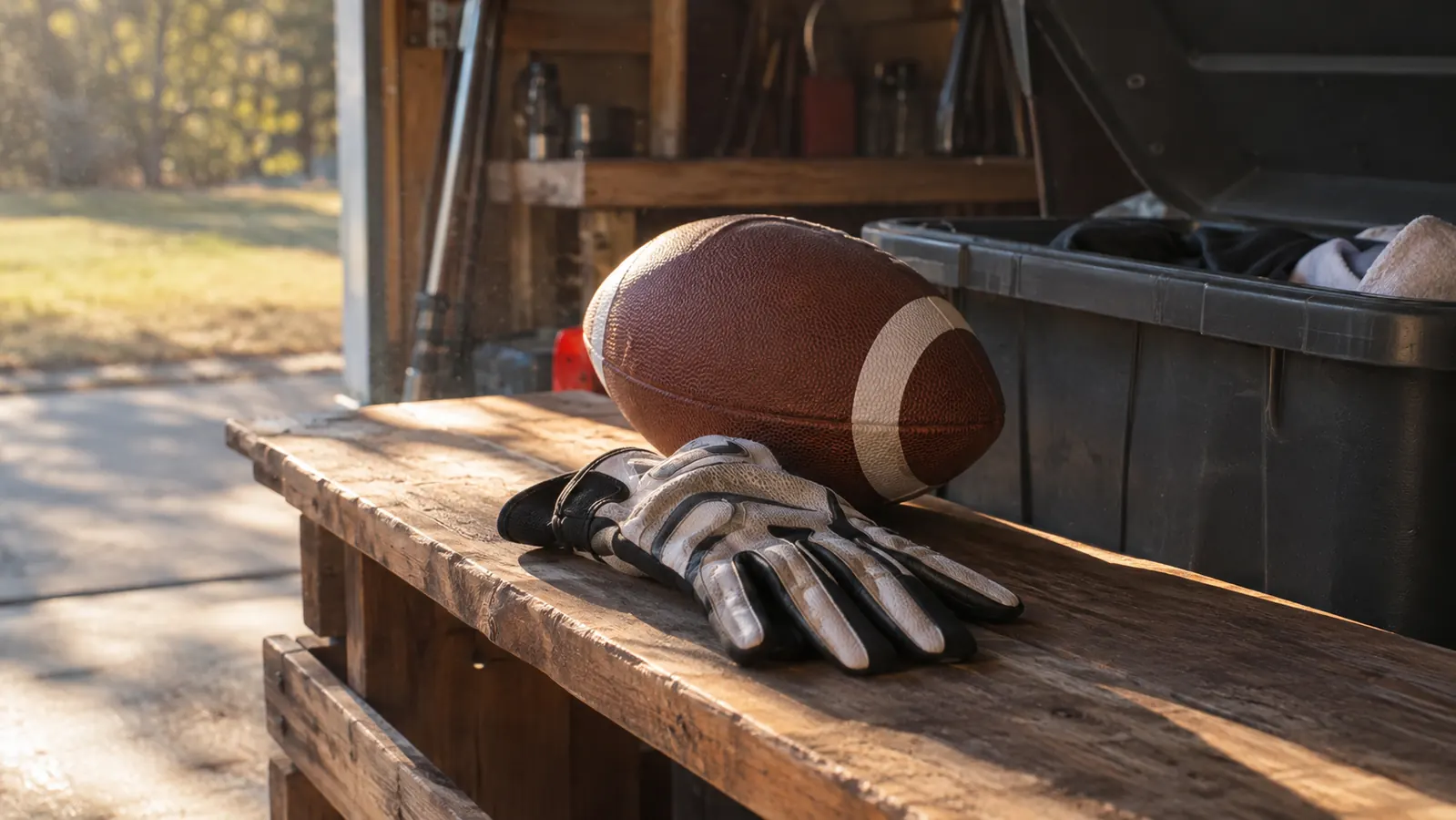
The ambidextrous design is genuinely useful for a family or a team bin. There is no left or right to lose. If one glove goes missing, the other can still work with a spare. That is not a feature you brag about, but it is the kind of detail that keeps a pair from becoming useless after one lost glove. Jalen lost a glove once at a camp, and we did not have to throw the other one away. That alone made the Seibertron design easier to live with.
The hook and loop closure is easy to use with one hand. The machine wash care instruction is parent-friendly. The flexible feel is real. The initial grip is good enough for a young receiver to build confidence. And the sizing chart, when you actually use it, is more detailed than most. The centimeter measurements are the best part of the listing. They are also the part most people skip. If you are reading this on your phone while standing in a sporting goods store, open the listing and read the numbers before you grab a box.
Where They Fall Short
The first shortfall is the grip life. I expected a glove with 'Ultra-Stick' in the name to hold its tack longer than three weeks. It did not. The second is the sizing. The chart is detailed, but it is still a chart. If you are between sizes, you are guessing. The third is the lack of a true line glove option. If your player is a lineman, this is the wrong product. The fourth is wet weather. We had one damp morning, and the gloves felt slippery on the ball. I did not test them in heavy rain, so I will not make a claim either way. I will say that I would not count on them in wet conditions.
The name also sets an expectation that the glove does not fully meet. 'Elite Ultra-Stick' sounds like a game-day glove. In my experience, it is a practice glove that starts strong and fades. That is not a bad thing. A practice glove has a job. But if you are buying these for Friday night, understand what you are getting. They are not a magic pair that will fix dropped passes. No glove will. They will help a player who already catches with his hands. They will not turn a player who catches with his body into a receiver.
What I Liked
- Ambidextrous design is easy to manage in a family or team bin
- Hook and loop closure stayed secure through six weeks
- Machine wash care is parent friendly
- Flexible feel from the first practice
- Strong initial grip on catchable balls
- Detailed centimeter size chart
Where It Falls Short
- Grip fades by week three
- Sizing still requires careful hand measurement
- Not a line glove for blocking drills
- Wet weather grip is uncertain
- Not a full-season daily practice glove
By week three, the palm had gone from tacky to slick enough that Jalen noticed it on a crossing route, and that is the whole review in one sentence.
Who This Is For
The Seibertron Pro 3.0 is a good fit for a youth receiver who is moving from backyard catch to organized practice. It is a good fit for a parent who wants a first pair that does not require a long break-in. It is a good fit for a rec player who plays once or twice a week and wants a comfortable glove with a hook and loop closure. It is also a good fit for a team equipment bin, because the ambidextrous design means fewer orphans.
It is a reasonable backup pair for a high school player. If your son or daughter has a primary game glove and wants a spare for practice, these will do the job. They are not the pair I would buy as the only glove for a varsity starter who practices every day. They are the pair I would buy for the player who is still learning what he likes and does not need to commit to a top-tier pair to find out.
Who Should Skip It
Skip these if your player is a lineman who needs hand protection for blocking. Skip them if your player practices four or five days a week and needs a glove that holds its grip from August to November. Skip them if you cannot measure a hand and you are not willing to order two sizes and return one. Skip them if your player plays in wet weather and needs a glove that performs in the rain. And skip them if you are looking for a game-day glove with a long tack life.
That is not a knock on Seibertron. It is a knock on buying the wrong glove for the job. The Seibertron Pro 3.0 is a receiver glove with a flexible feel and a detailed size chart. If that is what you need, it is a fair choice. If you need something else, buy something else. A glove is a tool, and the right tool depends on the drill.
If the size chart fits your player, the Seibertron is worth a look
Use the centimeter numbers, plan for the grip to fade, and know this is a practice glove, not a season-long game glove.
Amazon Check sizing and availability on Amazon →