
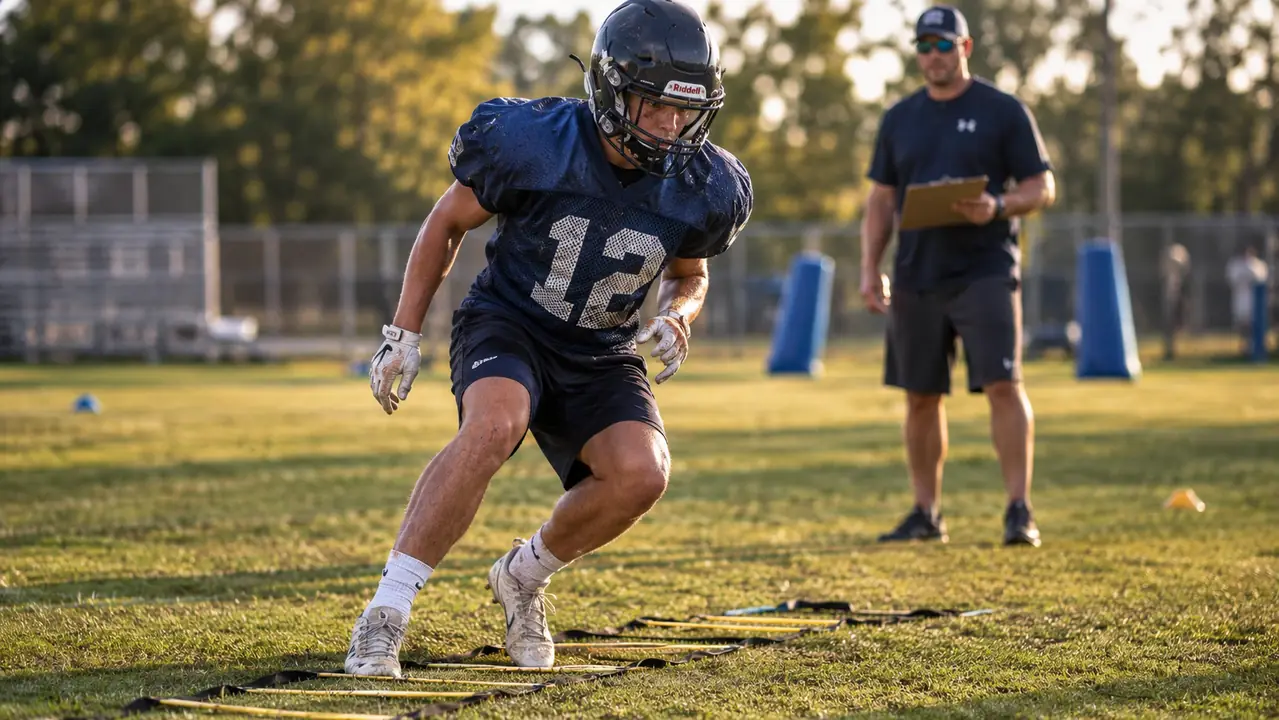
I started running ladder drills with our JV line group because I got tired of watching us lose the first step. We had strong kids. We did not have quick feet. The GHB Pro Agility Ladder was the first piece of equipment I bought for the spare bin in my garage, mostly because it packed into a bag and did not require a purchase order. That last part matters for a volunteer coach.
A ladder does not fix a bad stance by itself. It is a floor grid that forces a player to put a foot down and pick it up on purpose. That simple grid solves a real football problem: too many young players take long, heavy steps in tight spaces. Here are ten reasons I keep the GHB ladder in the truck and in the offseason plan.
Put a real footwork station in the truck without a trailer
The GHB Pro Agility Ladder lays out flat, adjusts at every rung, and packs into its own bag. Start with three clean trips and a rule that a clipped rung does not count.
Amazon See the GHB Ladder on Amazon →Builds the first-step quickness linemen need off the ball
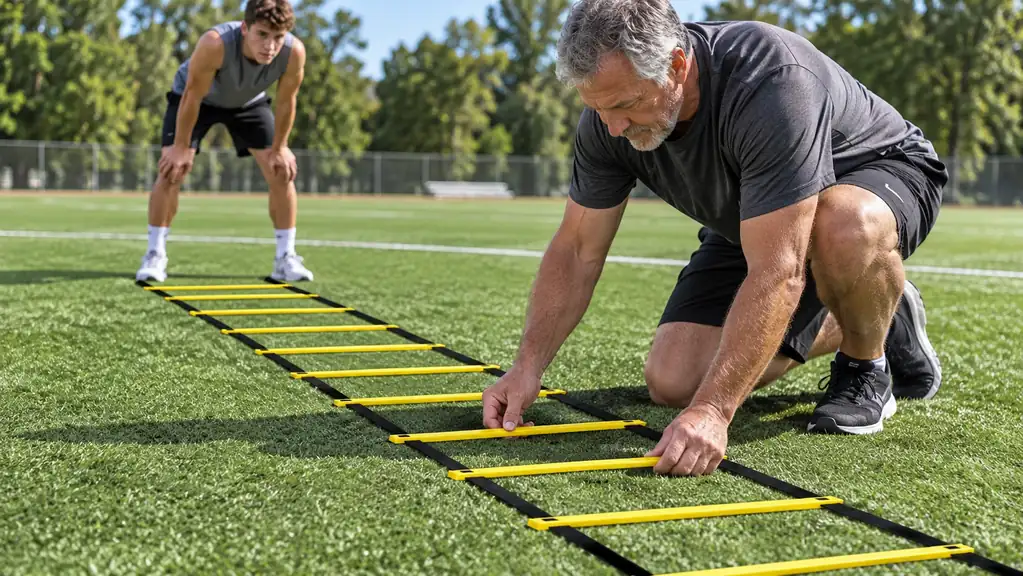
The first step is not a track start. It is a short, hard push that gets a lineman into a block before the defender can set his hands. Ladder work trains that step without a helmet or a collision. I run two sets of one-in, one-out through the 12 rungs, then a set of lateral steps. Each rung is 16.5 inches long and the spacing adjusts up to 15 inches, so I can open the ladder for Jalen or tighten it for a younger kid who needs shorter strides.
Teaches clean foot placement without a cone maze
Cones teach change of direction, but they do not force a player to put a foot down in a tight window. The ladder does. A player who clips a rung gets immediate feedback. I set the ladder on the practice field, run half-speed reps first, then full speed. The goal is quiet feet and eyes up, not a fancy dance. For linebackers, that translates to staying square and not crossing their feet when they scrape.
Fits a full offseason progression in 20 feet
Our practice field is not always open. The backyard is. A 20-foot ladder gives me enough room to run straight-ahead, lateral, and in-and-out patterns without moving the setup. I start with one foot per square, then two feet per square, then a lateral run. The 12 rungs give a clear finish line. I can time a rep or just count clean trips. Either way, the player knows when the set is over.
Makes change-of-direction work measurable in reps
You cannot measure heart in a ladder drill, but you can measure clean reps. I ask for three clean trips. A clipped rung does not count. That rule does two things. It keeps the player honest, and it gives me a simple read on focus when the August heat is on. The adjustable rungs help here too. If a player is rushing and getting sloppy, I narrow the spacing and make the drill simpler. If he is clean, I open it up.
Warms up the ankles and hips before contact drills
Ladder work is low impact compared with sleds or tackling drills. That makes it a good first block after a dynamic warmup. The hips open, the ankles get used to quick loads, and the player gets a sweat before we put hands on each other. I do not use it as a substitute for a proper warmup. I use it as the bridge between warmup and contact. Five minutes of ladder, then Indy drills. That order has kept our practices moving.
Turns a driveway into a footwork station
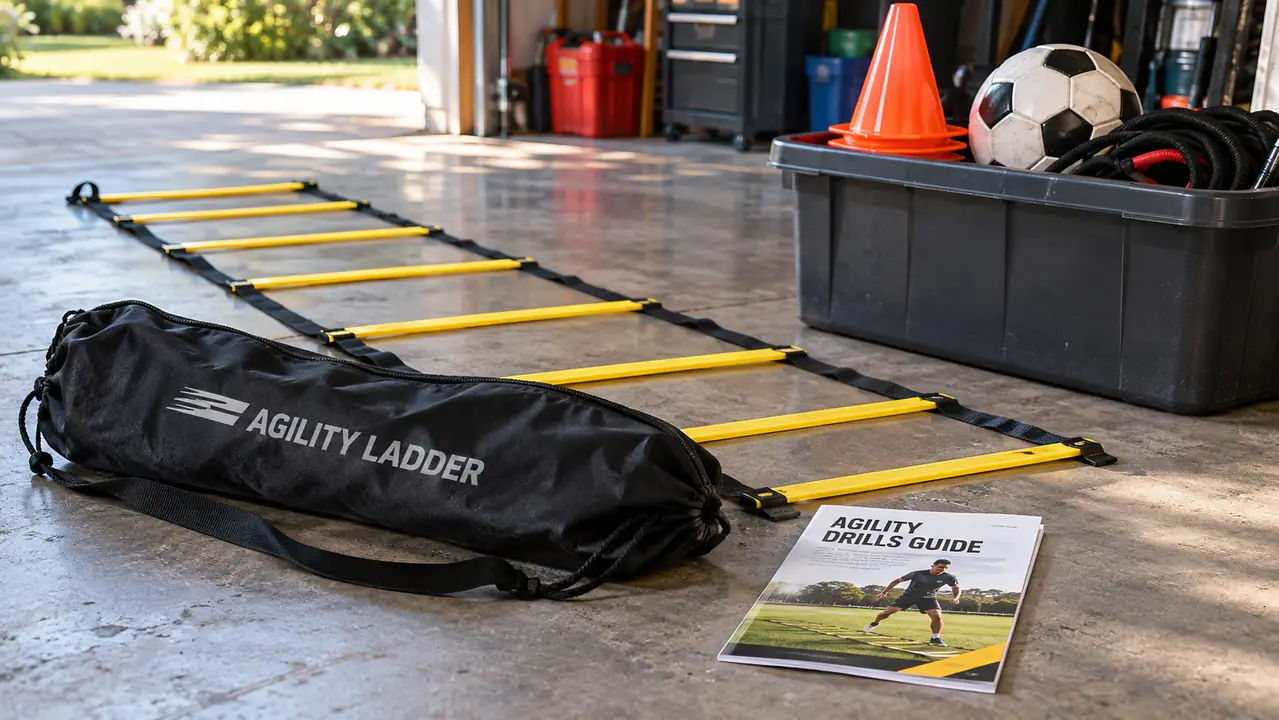
Not every kid has a field open on a Sunday. A driveway, a flat patch of grass, or a gym floor works. The GHB ladder is 4.8 ounces and comes with a carrying bag, so Jalen can take it to a friend's house or I can keep it in the truck without it taking up space. The drills guide gives a parent a starting point if they never played. That matters in youth football. A lot of parents want to help but do not know what to run.
Keeps young players focused because the reps are short
Long conditioning runs lose a 14-year-old's attention. A ladder rep lasts seconds. That short window makes it easier to coach one detail at a time: stay low, eyes up, punch the foot down. I run six to eight reps, then rotate. The line moves fast, nobody stands around, and I can correct a player without stopping the whole group. For a volunteer coach with one assistant, that pace is the difference between a useful station and a babysitting job.
Packs into the equipment bin and travels to away games
Our equipment bin lives in the garage and rides in the gray pickup. Space is tight. The GHB ladder packs down small enough to fit beside the spare helmets, and the carrying bag keeps the rungs from tangling with everything else. I have pulled it out at away games when the field is open before warmups. It is also the first thing I check when we load the truck. If the bag is missing, I know a player borrowed it.
Adds competition without adding collision risk
Football players compete at everything. I use that. Two players, two trips, cleanest feet wins. No contact, no helmet, no risk of a collision on a Tuesday in June. The loser grabs water and resets the ladder. That small competition gets more effort than a lecture about footwork. I have seen a kid who coasts through conditioning lock in for a ladder race because he does not want to lose to a younger player. That is free motivation.
Gives a coach a simple read on who is ready
By the end of July, I can tell a lot from a ladder set. Does the player keep his eyes up? Does he cross his feet? Does he slow down at the last rung? Those answers do not replace film, but they tell me who has been working. The GHB ladder gives me a standard drill I can repeat every week. Same setup, same rules. When a player improves, I can see it in the reps, not just in my memory.
What I'd Skip
I would skip any ladder drill that turns into a race to the finish with no rules. Speed without foot placement is just sloppy. I would also skip using a ladder as punishment. If a kid associates footwork with getting in trouble, he will hate it by September. And I would skip buying a second ladder before the first one gets used for a full month. The GHB ladder is listed with a lifetime manufacturer warranty, which is fine, but I judge gear by a season. One 20-foot ladder and a plan is enough.
Twelve rungs, twenty feet, and a rule that a clipped rung does not count. That is a real footwork session, not a gadget demo.
If the first step is late, fix it in the driveway this week
The GHB Pro Agility Ladder gives you 20 feet and 12 rungs, with adjustable spacing and a bag that fits in the truck. Start with three clean trips. Then add speed.
Amazon See the GHB Ladder on Amazon →