
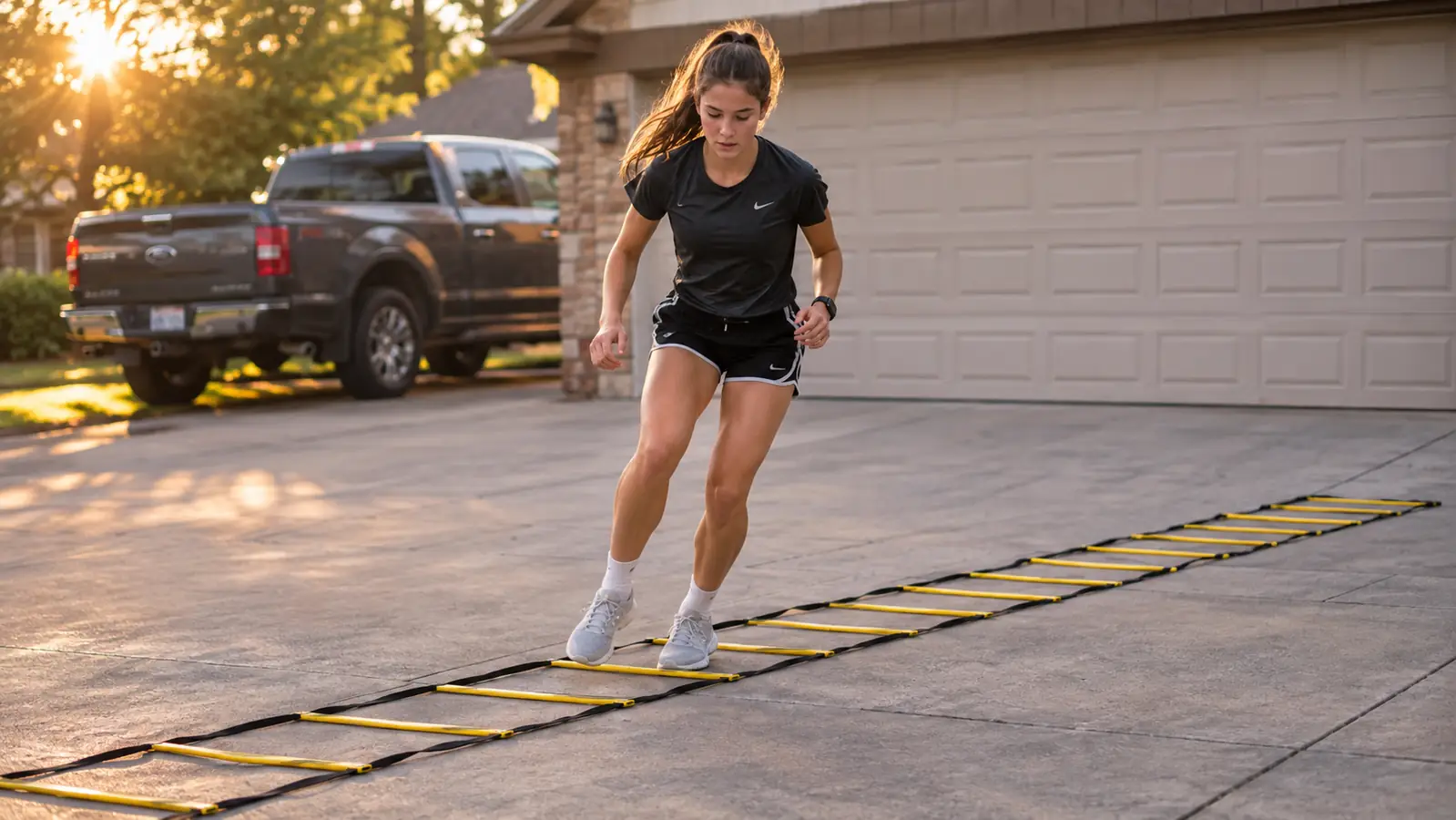
I bought the GHB Pro Agility Ladder on a Tuesday night in September, mostly because I was tired of watching my son do the same three cone drills in our driveway and call it footwork. Jalen is 15, a sophomore linebacker, and like a lot of young linebackers he is fast in a straight line and slow in the mess. Cones let him cheat. He could round the corner, take one wide step, and still look quick on video. A ladder does not let you cheat. That was the entire reason I ordered it.
I am not a skills trainer. I am a volunteer assistant line coach for the JV team here in Chattanooga, and I played offensive line in small college, which means my own playing days were spent going forward and never sideways. What I do know is what I have watched work on the practice field and what has survived a season in my garage, where the spare equipment bin lives and where the gray pickup gets loaded every Tuesday and Thursday.
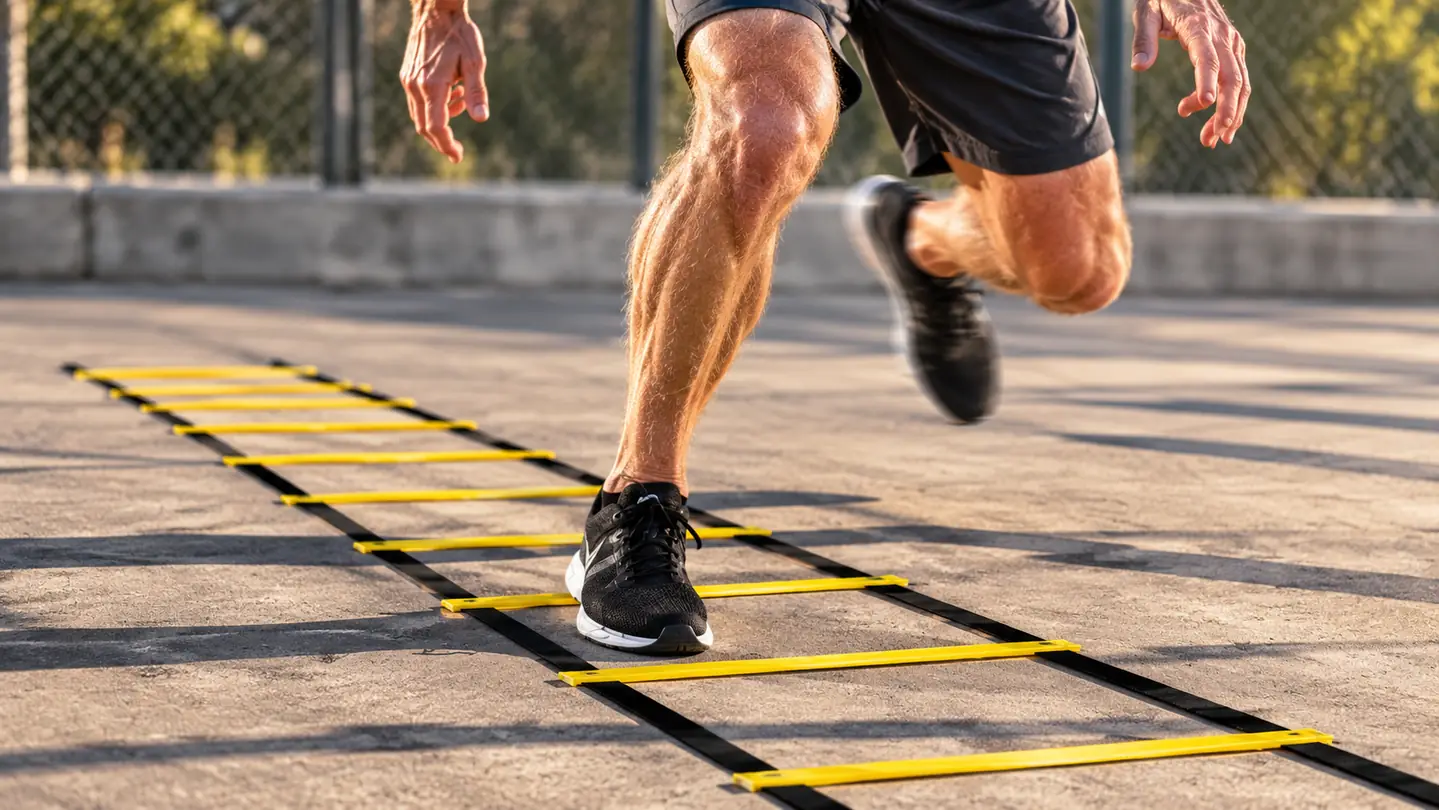
Before the ladder, driveway work went like this. I set four cones in a line. Jalen high-stepped through them twice. Then we both got bored and went inside. Ten minutes, maybe. The problem was never his attitude. The problem was that four cones do not ask much of you. There is a lot of empty space between them, and a kid with decent balance can coast through that space without ever putting his foot down where it needs to go.
The GHB ladder shrinks that space. Twelve rungs over 20 feet means the steps come faster than he can think about them. He either puts his foot down clean or he catches a rung and stumbles. First session, he caught a rung. Second session, he caught two. Third session he slowed down, which is the opposite of what a fifteen-year-old wants to do, and that was the moment the thing earned its spot in the driveway.
By the fourth week he was running the pattern with his eyes up and his hands ready, and I had stopped saying look at your feet because he was no longer looking at his feet.
Twelve rungs, 20 feet, and a bag that rides in the truck box
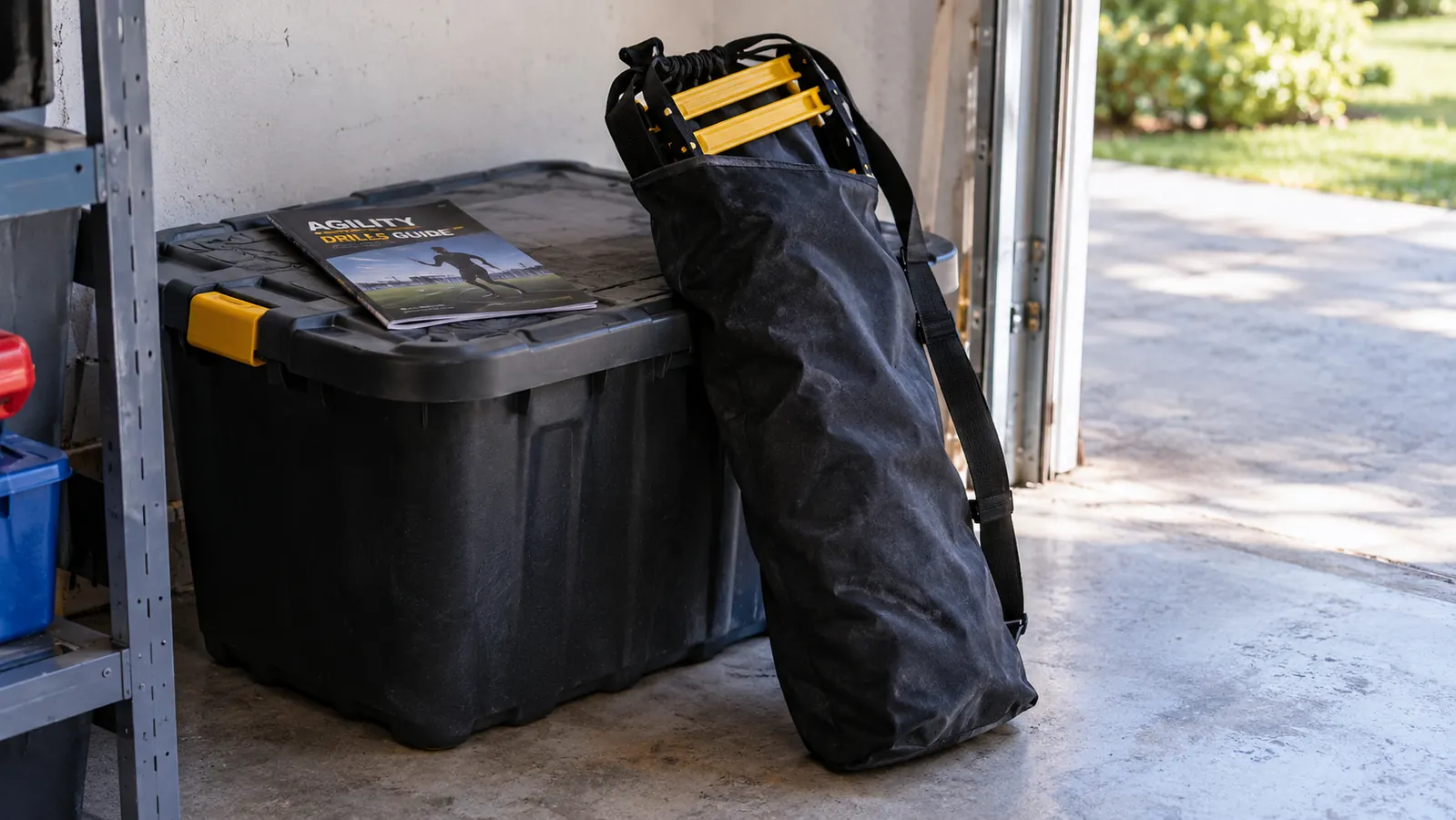
The GHB Pro Agility Ladder rolls into its own carry bag and weighs less than a water bottle, so it goes from the garage to the practice field without a second trip. The set also includes a drills guide if you want a starting point beyond my four-cone routine.
Amazon Check Today's Price on Amazon →Here is what I did not expect. The rungs are adjustable, up to 15 inches apart, and that turned out to matter more than the length. Early in the week I narrow the spacing for quick feet and short, choppy steps. Later in the week I open it up and we use the ladder as a warmup, one foot per rung, long strides, get the hips loose. Same piece of equipment, two different jobs.
The rungs are plastic and 16.5 inches across, which is wide enough that a varsity-sized foot lands on the rung instead of half on it. Ours has been on the driveway, in the backyard, and on the turf at the school. It has been stepped on by a 200-pound kid in cleats and by me in work boots. The straps have not frayed and the rungs have not cracked, which is more than I can say for the cones I keep replacing.
Two honest complaints. On smooth concrete the ladder slides a little when a kid pushes off hard, so I set the ends against the garage apron or drop a couple of equipment bags on the corners. And when you change the spacing, check it again before the next session, because the rungs can shift on the straps once the ladder is rolled up and carried. Neither one is a dealbreaker. Both are the kind of thing you figure out in a week.
Our schedule is simple and it has not changed since October. Tuesday and Thursday after practice, ten minutes on the driveway before he goes inside. Sunday morning, twenty minutes, a longer pattern with more rest between runs. That is it. No video analysis, no fancy setup. The ladder comes out of the bin, gets laid down, and goes back in.
The carry bag matters more than it sounds. My equipment bin is already full of pads, a spare jersey, and whatever the team leaves in it. The ladder rolls down to about the size of a folded blanket, so it lives in the bin and comes out when we need it. The drills guide that comes with it is short and nothing fancy, but it gave Jalen something to run on his own on days when I was still at the field with the line.
We still use cones. Cones are better for change of direction and for anything that involves cutting. The ladder is for the part that comes before that, the part where a linebacker needs his feet to arrive at the same time as his eyes. Once Jalen stopped looking down, his first step got quicker off blocks. His position coach noticed before I did, which is about the best review a driveway drill can get.
What I'd Tell You If We Were Sitting at My Kitchen Table
If you are a parent thinking about buying one of these, here is my honest read. Do not buy it expecting it to replace a trainer. It will not. Buy it because it packs small enough to leave in the truck, simple enough that a teenager will actually use it without being nagged, and boring enough that it works. Ten minutes, three times a week, on a driveway, with the same ladder your kid has already stepped on a hundred times. That is the whole program. The GHB ladder is the tool, and it has held up for us through a full fall and into winter workouts. Start with the basics, keep the sessions short, and let the reps do the work.
Ten minutes in the driveway beats another hour of nothing
The GHB Pro Agility Ladder is 20 feet of plastic rungs, a carry bag, and a drills guide. Roll it out, run it three times, roll it up. That is the whole routine.
Amazon See the GHB Agility Ladder on Amazon →