
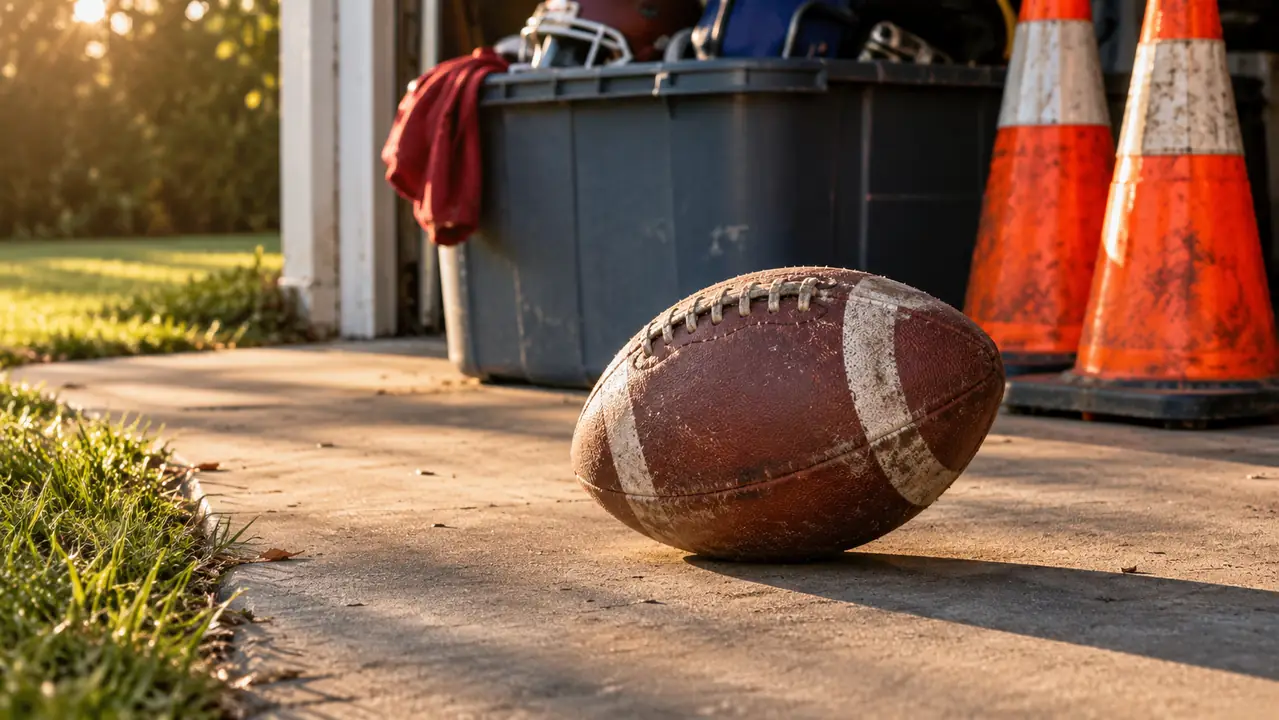
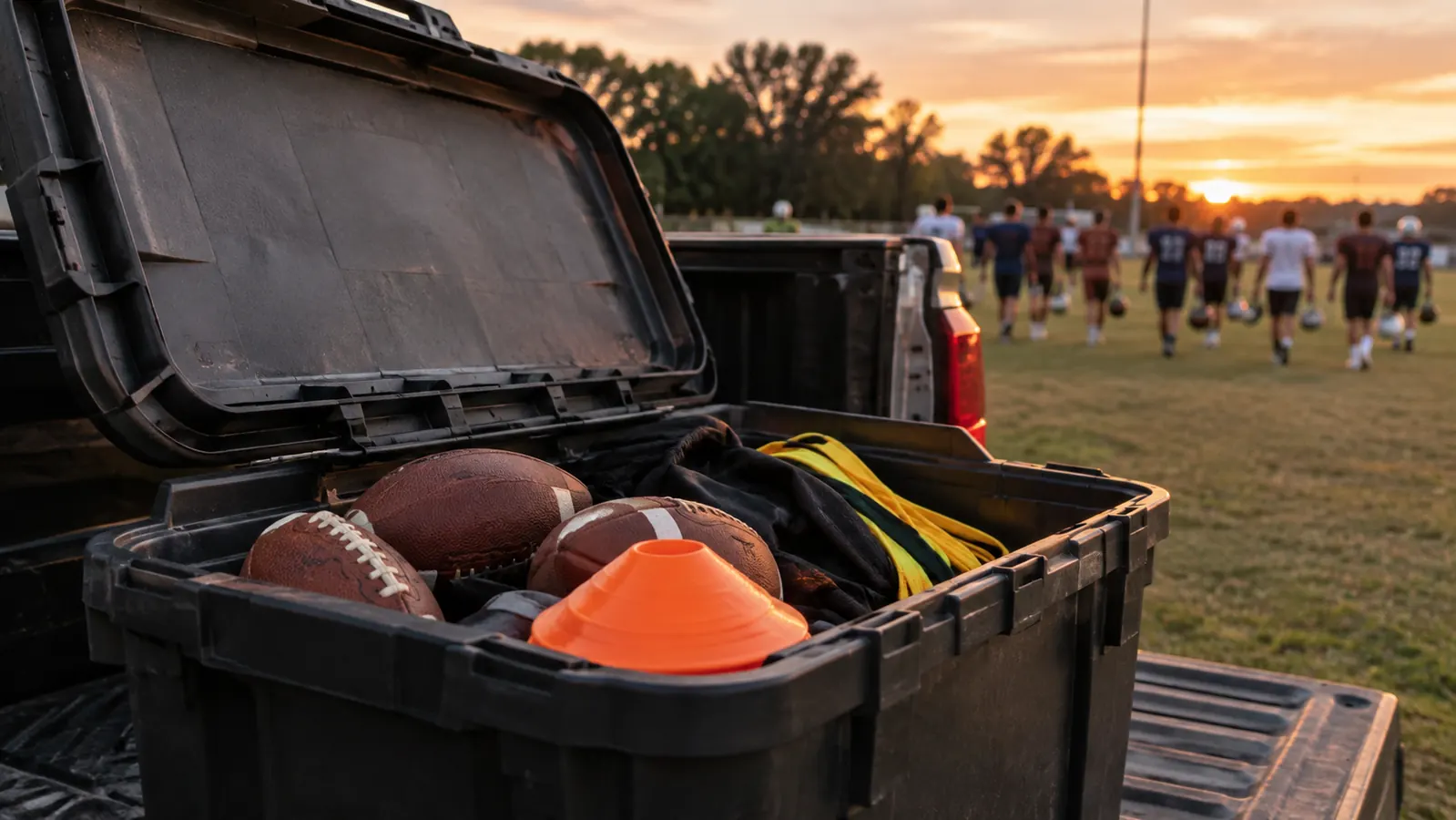
The gray pickup has hauled the same plastic equipment bin to practice for three seasons, and I can tell you exactly what is at the bottom of it. Two cones that lost their shape, a whistle I keep meaning to throw out, and a Wilson composite football that has no business still being round. I bought it the fall Jalen was in eighth grade. It has not had an easy life since.
I am not an equipment guy. I am a volunteer assistant line coach for a JV team in Chattanooga, which mostly means I get the sled and the parents' questions. But when your son moves up to linebacker and the middle school ball starts looking small in his hands, you start paying attention to what the older kids carry out of the locker room.
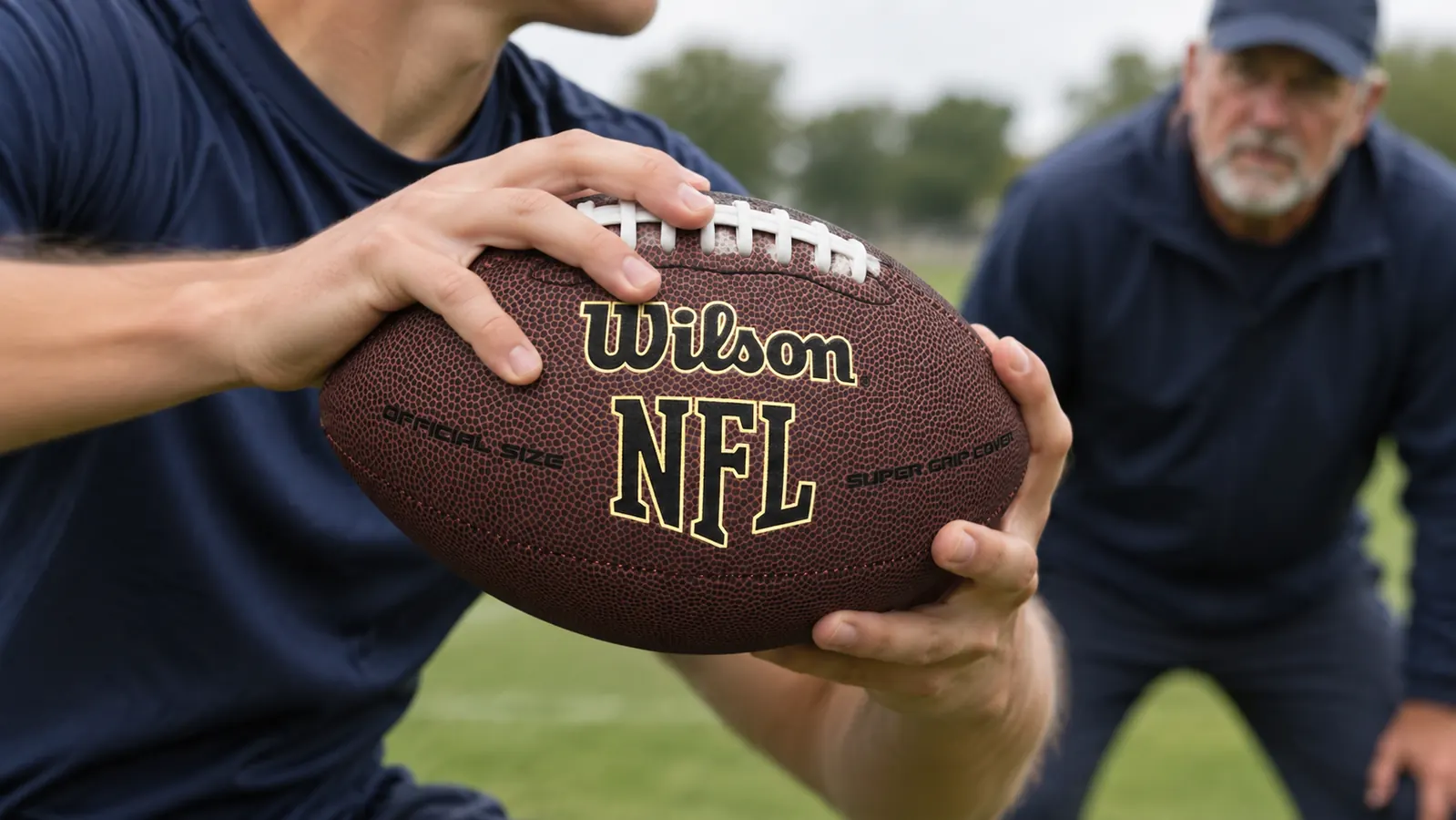
The first thing I learned is that leather and composite are two different purchases, not two versions of the same one. Leather is a commitment. It wants a break-in, it wants to stay dry, and it lets you know when you have neglected it. Composite is what you hand a kid who is going to leave the ball in the grass overnight and then throw it again at seven the next morning.
The second thing I learned came from my own driveway. Jalen and two neighbors wore a path in the grass throwing after dinner, usually in the dark, usually with a younger kid rushing the passer. That is where a football actually gets destroyed. Not on the practice field with a ball bag and a dry sideline. In the driveway, on wet grass, on the concrete apron at the edge of the garage.
I have also watched it on the practice field, which is a different kind of test. Two hours of routes on a Monday, a wet Wednesday, then a Thursday where the ball never gets put away because the linebackers want one more drill. The seams are where a cheap ball goes first. Once the stitching starts to give on one panel, the whole thing is done. That has not happened here.
Three seasons in, the cover is scuffed at the nose and there is no seam separation. That is the whole review.
The ball that survived the driveway, not just the playbook
Composite cover, butyl rubber bladder, stitched construction, official size. The same ball that has been riding in my equipment bin since Jalen was in eighth grade.
Amazon Check today's price on Amazon →Here is what you are actually buying, in plain terms. The listing calls it a composite cover over a butyl rubber bladder with stitched construction, official size, 11.36 inches across and 454 grams, which is right at a pound. Nothing in that description is exciting. All of it is the reason the ball is still in the bin while four or five others came and went.
The laces are the classic style, and that matters more than parents think. Every kid who has been handed a ball with molded plastic laces knows the difference by the second throw. You want the fingers to find the same seam every time, so the grip becomes a habit instead of a guess. By week two, nobody was thinking about their hands.
Sizing is where I see the most wasted money. The official size is built for high school and college, ages fourteen and up, and it is the right ball for Jalen now. It is not the right ball for a fourth grader. Wilson also makes a junior size for grades four through six, ages nine to twelve, and if your kid is in that window, buy that one and stop there. A too-big ball teaches bad mechanics, and it teaches them fast.
What it is not is a leather ball. If you have a varsity quarterback who has thrown broken-in leather since seventh grade, he will notice the difference in feel the first time. The composite cover trades some of that richness for durability, and it is a trade I would make again for a JV program and a driveway. What it will not do is fix bad hands. A ball that grips well still hits the grass when the receiver is watching the rush instead of the nose of the ball. Equipment helps. Reps help more.
Cold mornings are where a cheap ball announces itself. October here goes from eighty degrees at kickoff to forty by the end of practice, and the balls that go hard and slick in that swing are the ones kids quietly stop throwing. This one has not done that. Nobody mentioned it after week three, which is the highest compliment equipment ever gets.
What I'd Tell You If We Were Sitting at My Kitchen Table
If you are standing in a sporting goods aisle with a kid pulling at your sleeve, here is what I would say. Match the size to the age before you match anything else. A fourth grader fighting an official size ball learns to fight the ball instead of throwing it, and that habit costs you a season to undo. Buy the junior size for grades four through six. Move up when the kid moves up.
Then accept that the ball is going to live outside. It will get left in wet grass, kicked across a parking lot, and thrown in the dark long after you have gone inside. That is not neglect. That is what a football is for, and a ball you are afraid to use is a ball your kid will not get better with. Buy the one built for that life and stop thinking about it.
The Wilson at the bottom of my equipment bin is the proof I would show you. Three seasons, one ball, still round, still snapping, still the one the linebackers grab when they want one more drill. I have replaced almost everything else in that bin. I have not had to replace this.
Buy the ball once and stop thinking about it
Official size for ages fourteen and up, junior size for grades four through six. Composite cover, stitched panels, classic laces, and a bladder that holds through a Tennessee temperature swing.
Amazon Check today's price on Amazon →